
100% Gas-Powered Completions Support E&Ps’ Operational and Sustainability Objectives
Products for Oil & Gas
-
Products for Oil & Gas
Learn More -
Gas Compression Engines
Learn More -
Land Drilling Engines and Generator Sets
Learn More -
Land Production Generator Sets
Learn More -
Mobile Gas Solutions
Learn More -
Offshore Drilling and Production Generator Sets
Learn More -
Well Service Transmissions
Learn More -
Well Service Engines
Learn More
Parts & Services
Sustainability
About
of
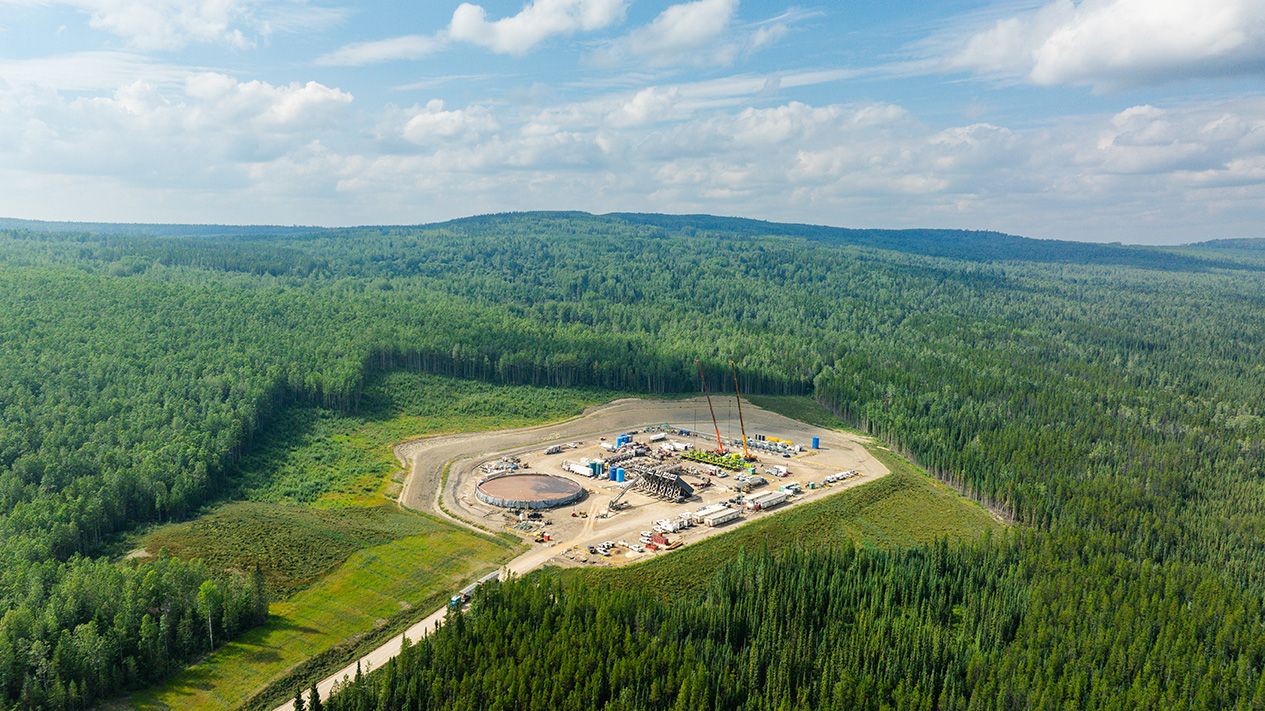
Pressures in the oil patch extend beyond the wellbore. Modern views of operational excellence are often defined by cost efficiency and environmental stewardship. Fuel costs not only represent a significant line item in a completions budget but also a source of greenhouse gas (GHG) emissions. As Exploration & Production (E&P) companies seek to optimize operating expenses while lowering GHG emissions sitewide, oilfield service companies must respond to this shift with an approach that supports these dual imperatives.
This requires oilfield service companies to possess greater operational flexibility to respond to E&Ps’ specifications while maintaining performance and economics. The Caterpillar Gas Mechanical System (GMS) fulfills that need, fully powering a frac job with 100% natural gas while maintaining a traditional pad layout. The GMS expands oilfield service companies’ options beyond existing dual fuel and eFleet capabilities, empowering them to satisfy any completions specification E&Ps may request.
Fueling Lower Costs and GHG Emissions
As simulfrac adoption continues to grow across the oil field, driving higher horsepower requirements per site, the GMS helps reduce pumping equipment footprint to enable operators to fit more horespower on the same pad. Oilfield service companies report that the GMS maintains consistent performance when running on different gas compositions while delivering reliable grid-independent power and performance. The GMS is also field proven to decrease fuel use by up to 45%, depending on the power source (reciprocating or turbine), when contrasted with alternative completions technologies. This helps ensure uninterrupted operations that are independent of compressed natural gas (CNG) supply logistics.
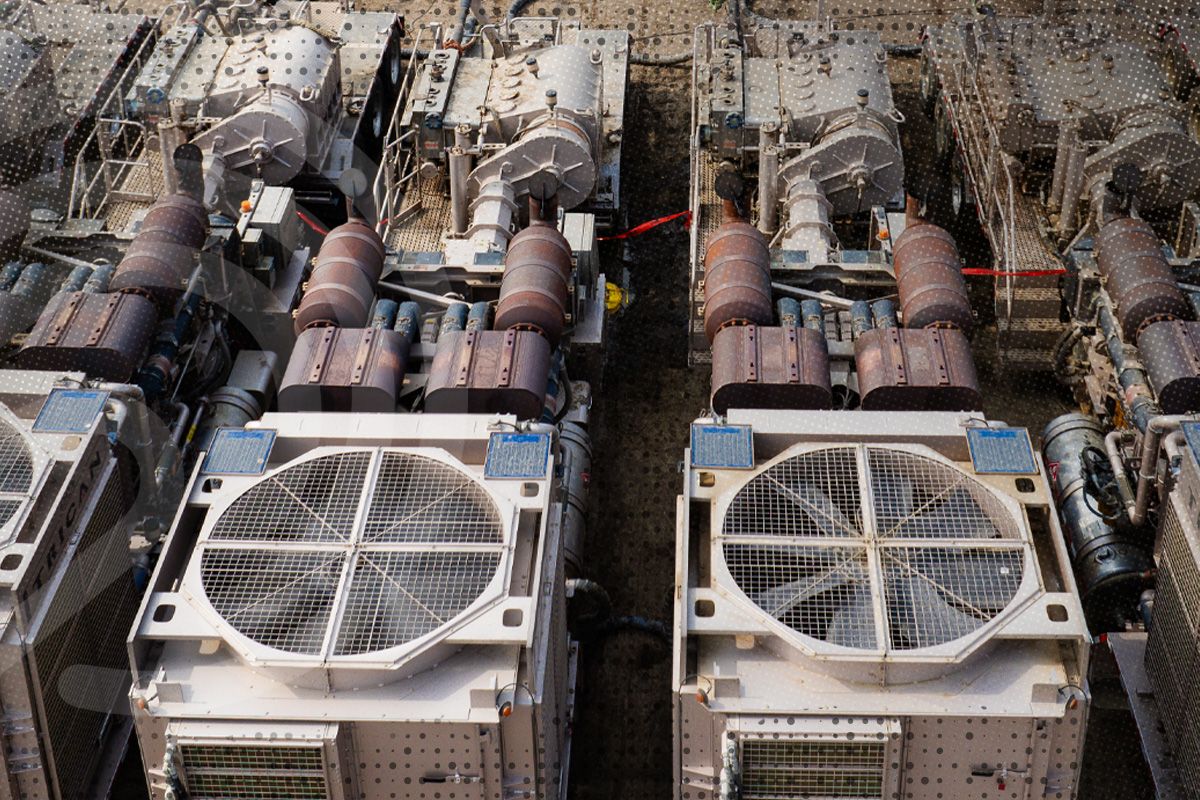
Rated at 3,600 hp, one GMS unit can perform the same amount of work as two 3512E Cat Dynamic Gas Blending (DGB) engines when optimizing for diesel displacement. This 2:1 power density advantage minimizes the number of trailers on location, reduces rig-up and rig-down time, lowers transportation costs and minimizes maintenance requirements.
The GMS’ ability to operate on field gas or CNG not only curbs fuel costs but also supports E&Ps’ sustainability objectives. When utilizing the GMS, site-level GHG emissions can be lowered by 10 - 15% compared to alternative next-gen technologies. The GMS also minimizes fuel handling and storage requirements on-site, which offers logistics advantages.
The Next Generation of Completions
As the demand for efficient oilfield operations grows, the GMS provides service companies with the flexibility to adapt to any requirement encountered in the patch. This versatility allows providers to broaden their competitive reach while delivering greater value to E&P customers.
In an evolving completions landscape, reducing fuel costs, simplifying operations, and lowering GHG emissions are essential to meeting new expectations. By expanding power density and optimizing performance, technologies like the GMS are shaping tomorrow’s sites today—positioning the industry to meet global energy demands more cost-effectively.
-
Gas Mechanical System
Having an efficient and effective power system for your oilfield operations shouldn’t be complicated. And it isn’t with the new Caterpillar Gas Mechanical System (GMS). This integrated power solution is purposefully built on our robust 3,600 horsepower Cat® G3500 engine and TH55 transmission platforms to deliver optimum mechanical efficiency for your pressure pumping operations. Recognizing North America’s focus on low-cost gas, the GMS utilizes 100% natural gas. Plus, its scalable design requires fewer trailers on-site, increases the power density per trailer, and decreases fuel consumption compared to alternative frac operation methods.
Learn More -
Cat® Dynamic Gas Blending™
Cat® Dynamic Gas Blending™ allows oil and gas operations to operate diesel engines on a wide range of fuels to cut diesel consumption while maintaining power.
Learn More

Your Business
 North America – English
Caterpillar Brands
- Caterpillar.com
- Contact Us
- My Marketing Preferences
- Site Map
- Cookie Settings
- Legal
- Privacy
- Do Not Sell or Share My Personal Information
- Accessibility Statement
- US-English
- © 2026 Caterpillar. All Rights Reserved.