
From “New” to “Now”: Transforming the Engine Room into the Energy Room
Products for Marine
Parts & Services
Sustainability
About
The maritime industry is currently navigating a significant evolution: the shift toward electrification for certain applications. This is particularly challenging in the tug and salvage sector due to high-intensity duty cycles where uptime, safety and responsiveness are non-negotiable. As operators look to equip specific vessels with marine battery systems, the engine room is being reimagined as an energy room.
Battery power has quickly become a cornerstone technology in the industry, prioritizing application suitability and safety. When designed to meet the unique demands of a given vessel’s operating parameters, batteries efficiently handle the load variability workboats require while helping lower greenhouse gas (GHG) emissions. However, moving to an energy room model requires a consultative approach that prioritizes an operator’s goals and operating profile to determine the most appropriate solutions. It’s crucial for each stakeholder to align on these aspects given the impact on operational and sustainability objectives.
The Intricacies of Installing Hybrid and Marine Battery Systems
Caterpillar Marine plays a pivotal role in the development and implementation of both hybrid and fully electric power solutions. A deep understanding of an operator’s goals as well as any variances between a vessel’s intended use and actual daily operation are crucial elements that determine the optimal energy room for a vessel.
By working closely with naval designers, integrators and shipyards, Caterpillar Marine translates that information into viable technical solutions. Decisions made during construction help avoid costly retrofits and maximize asset life, significantly influencing a vessel’s long-term flexibility, total cost of ownership (TCO) and operational value. A recent Caterpillar Marine e-tug (electric tugboat) project, the MedMarine VoltRA, illustrates how this collaborative approach materializes in practice.
of
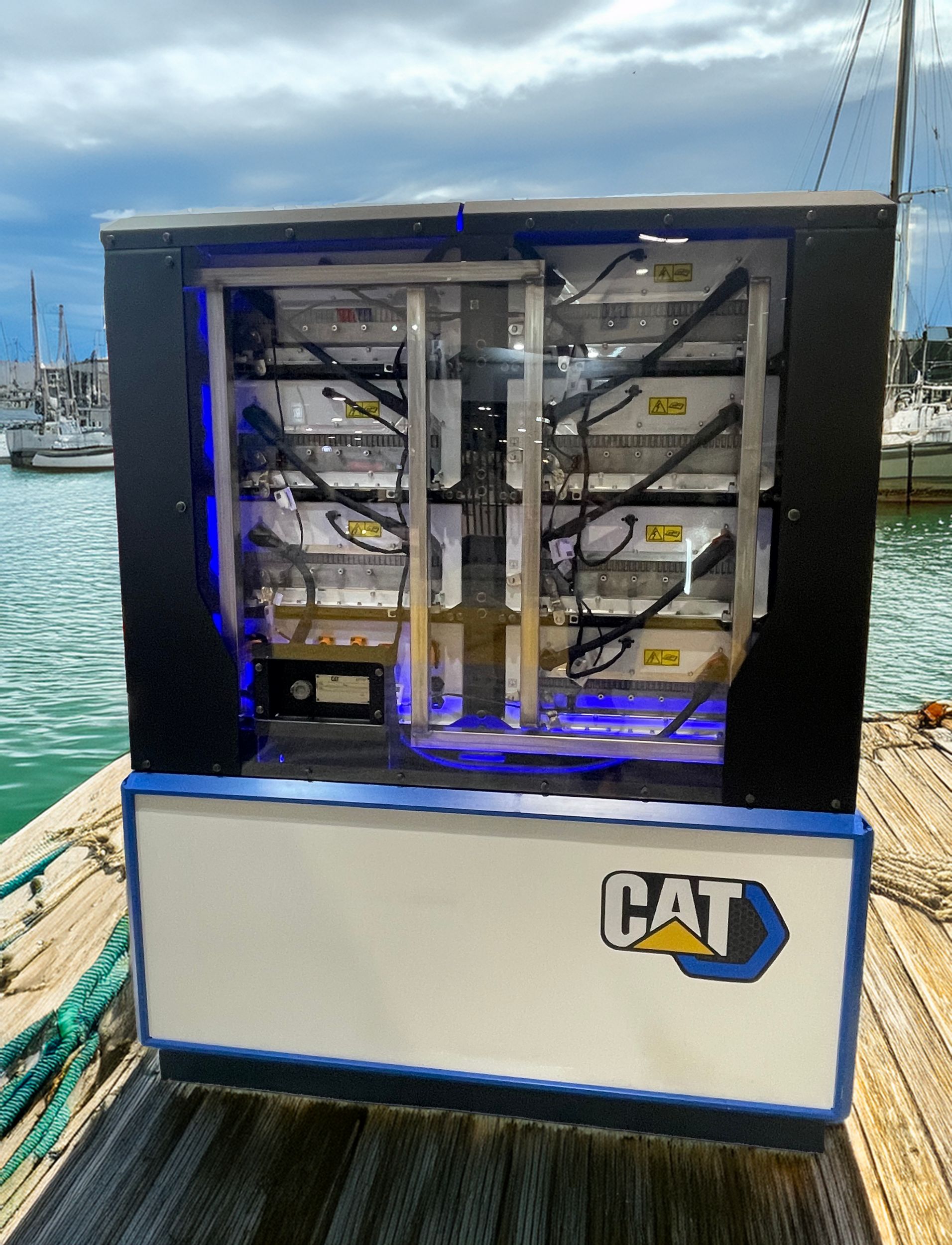
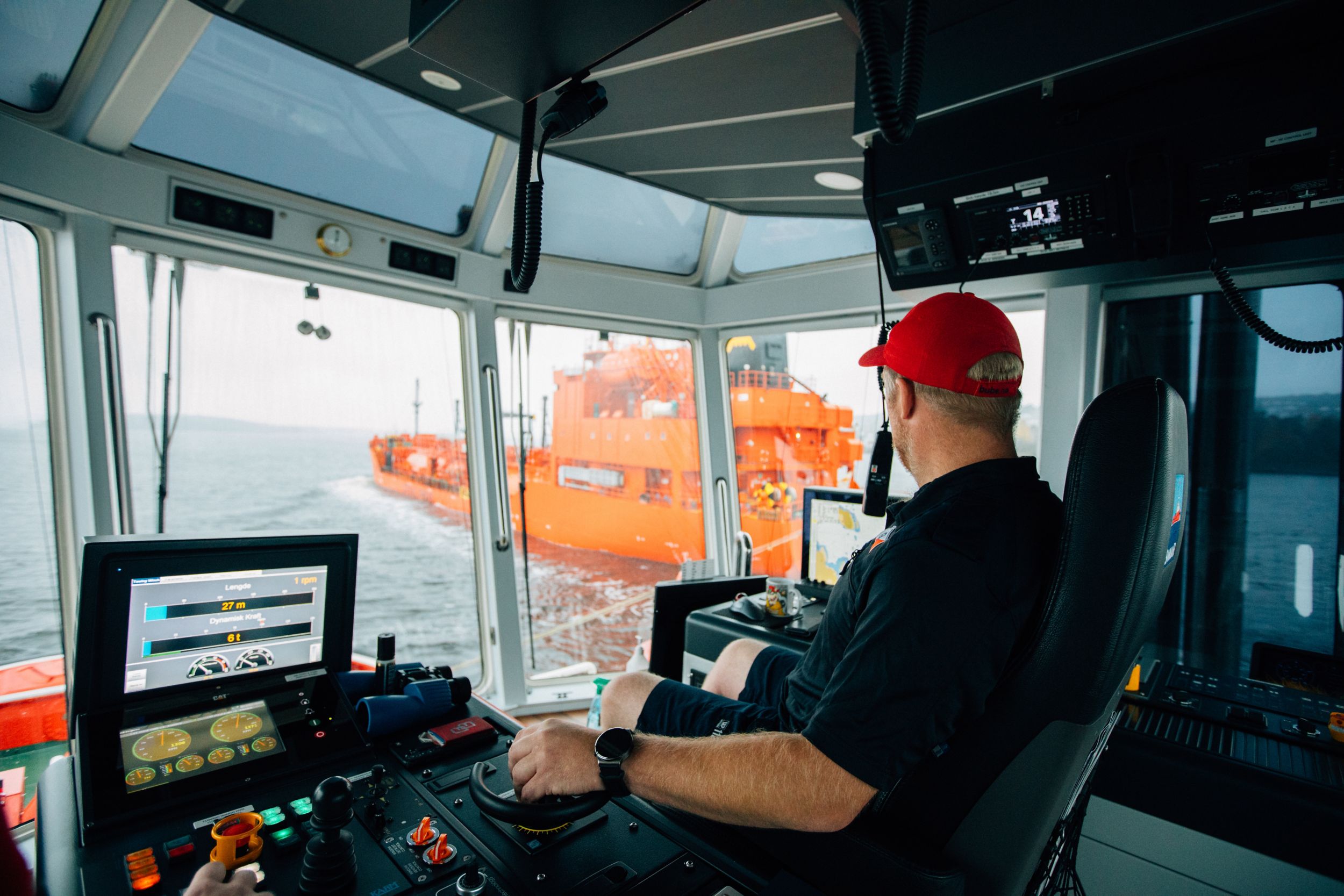
To support the operator’s goal of lowering GHG emissions while reducing fuel consumption and costs, Caterpillar Marine recommended an e-tug approach that allowed recharging when not in use. Designed to help large ships enter and exit ports safely, the 70-ton bollard pull harbor e-tug features the Cat® marine battery system and includes C32 range-extending generator sets. This enables the tug to operate on electric power while ensuring the reliability and performance required for harbor operations. The approach allows the operator to increase vessel uptime, enjoy geographic flexibility, improve TCO, reduce OpEx and lower GHG emissions.
What was once thought of as a novelty is becoming an operational advantage for certain marine applications. Electrification for electrification’s sake is being replaced by strategic goals that point to the cost and GHG emissions reductions benefits that hybrid or fully electric power options may provide.
of
Early collaboration with all stakeholders helps ensure vessels satisfy operational parameters while being poised to meet evolving industry requirements. An integrated approach helps vessel operators meet sustainability objectives while maintaining performance to support long-term asset value. The success of this transformation depends on collaboration across the entire ecosystem, demonstrating that the future of marine power is not defined by a single technology but rather how all elements work together as part of a cohesive powertrain strategy.
Your Business
 North America – English
Caterpillar Brands
- Caterpillar.com
- Contact Us
- My Marketing Preferences
- Site Map
- Cookie Settings
- Legal
- Privacy
- Do Not Sell or Share My Personal Information
- Accessibility Statement
- US-English
- © 2026 Caterpillar. All Rights Reserved.