
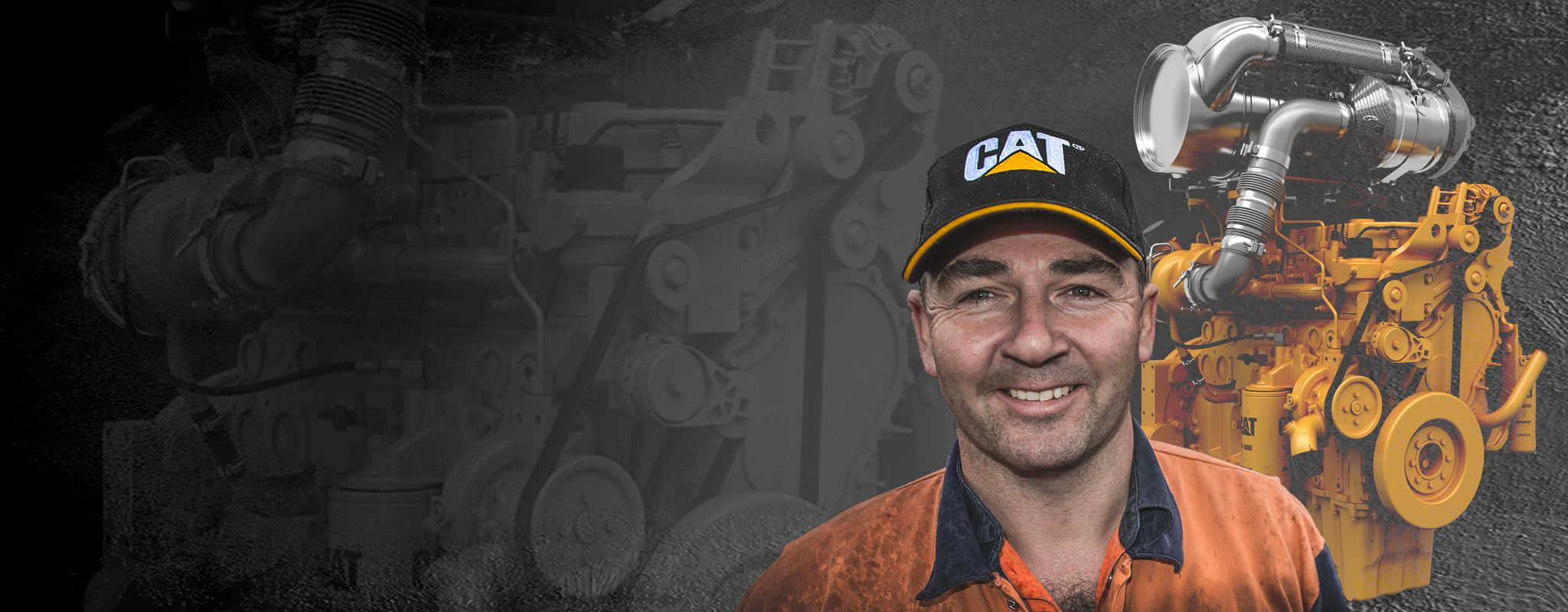
Four Things To Know About Engine Aftertreatment
Engine Parts
-
Cat Engine Parts for Your Equipment
Learn More -
Cat Powered Chippers and Grinders: Getting Down to the Grind
Learn More -
Cat Powered Pumps: Built to Last
Learn More -
Cat® Aftermarket Products for Any Application
Learn more -
Cat® Powered Compressors: Built to Last
Learn More -
Cat® Reman
Learn more -
Cat® Turbochargers
Learn more -
Cylinder Head Repair Options
Learn more -
Equipment Management
Learn More -
Equipment Management
Learn More -
Genuine Cat® Parts, Kits and Repair Options For Industrial Engines
Learn more -
Genuine Parts
Learn more -
Replacement Engines
Learn More
Services
Sustainability
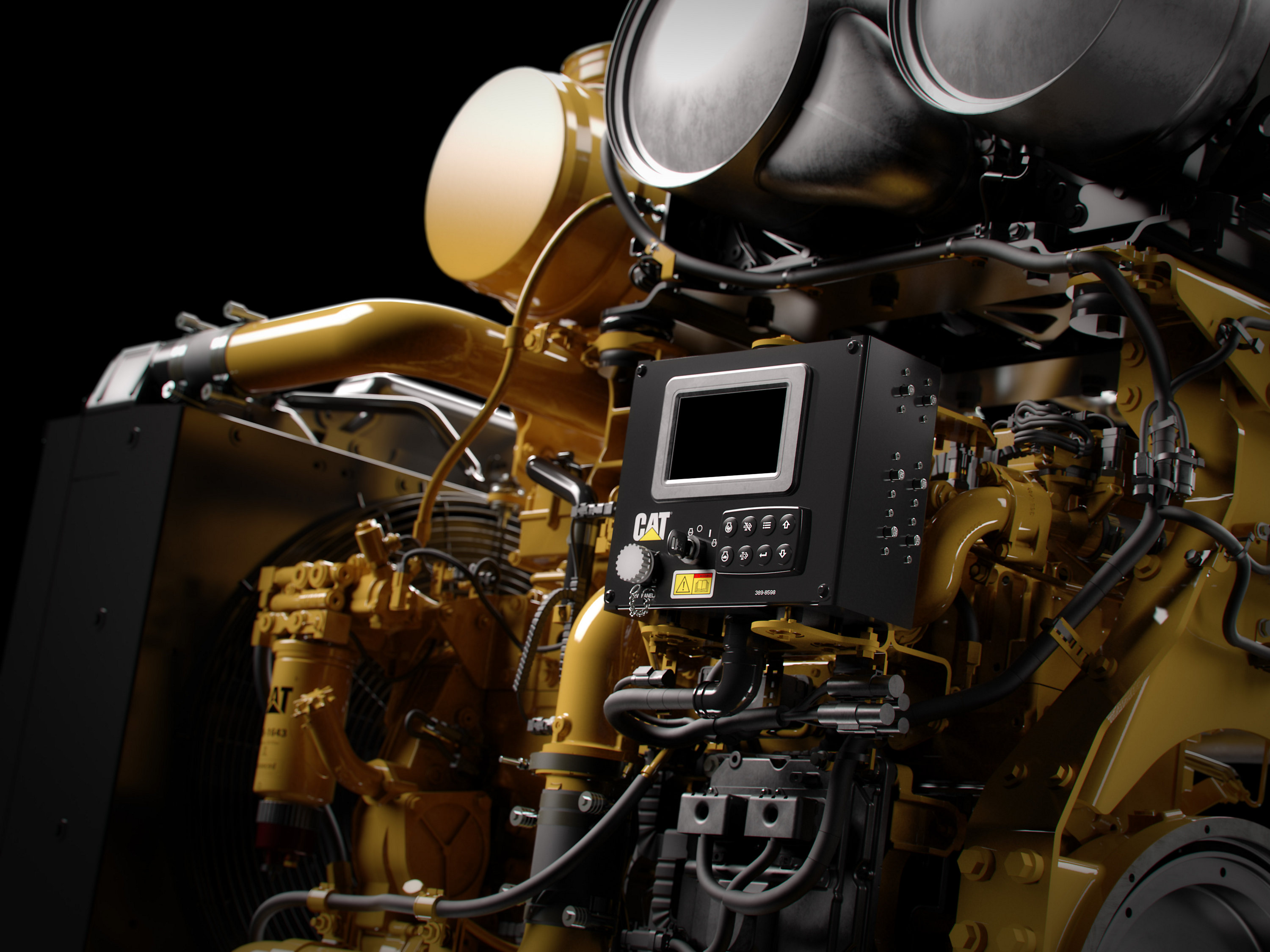
Getting the facts about validation, load requirements, installation guidelines and transparency will help you choose the most durable engine option for your products. As you’re talking with different engine suppliers about their products, here are four key questions about aftertreatment you’ll want to ask.
Consult with your Cat® dealer about your industrial engine requirements.
Question 1: Have You Done Testing In My Application?
Temperature plays a big role in the way aftertreatment systems reduce emissions. To burn off particulate matter, DPFs require temperatures inside the engine to reach a certain level — a challenge in very cold or high-altitude conditions. Temperatures can’t get too hot either, or cracking and failure may result. It’s a delicate balance, and that’s why validation is so important.
Every manufacturer tests products differently, so check that your application’s been covered. Here’s what we do at Caterpillar: All industrial engines are subjected to extensive in-the-field testing in everyday and extreme conditions. Each January and February, we send machines to the Arctic Circle to run at -32°C, as well as to Colorado, where they operate in a cold-temp, high-altitude environment. We also test engines in the dry summer heat of the Arizona desert, where temperatures routinely exceed 40°C, and inside cold chambers where temperatures drop to -50°C.
Question 2: Is There A Minimum Duty Or Load Factor Required?
Some engine manufacturers require an engine to operate above a minimum load — such as 20% — otherwise, it won’t get hot enough for the aftertreatment to work effectively. If it doesn’t hit that minimum, the DPF will clog and the machine will have to shut down for service.
Minimum requirements may be buried in the fine print, so inquire about them up front. You won’t find them with Cat industrial engines. We design and test our products to ensure they work no matter how heavy or light the load.
Question 3: What are your Installation Guidelines?
To reduce the amount of validation required, some engine manufacturers may reduce the amount of installation flexibility they offer. You might only be able to position the aftertreatment very close to the engine to maintain the necessary temperatures, for instance, or it may require the use of insulation. Cutting out options eliminates the need to test engines in a wide variety of environments and applications. That’s a time- and money-saver for the manufacturer but not necessarily for you.
It’s a good idea to ask about your engine supplier’s installation guidelines early on, because they can have a big effect on your engineering and design processes. More flexible installed aftertreatment solutions — like what Caterpillar and our dealers offer — can reduce your development time and expenses.
Question 4: How Transparent is Your Regeneration?
DPFs are meant to last an engine’s lifetime, which means the carbon and soot trapped inside must be removed regularly. That’s done through passive, active or stationary regeneration or some combination of the three. You’ll want to ask how regeneration is accomplished for the engine you’re considering, how often it takes place, if the machine can keep operating while it’s underway and what happens if something goes wrong.
Cat industrial engines feature continuous transparent regeneration, which means it naturally occurs in the background at all times — without operator interaction. Operators don’t have to shut down the machine or even push a button to start or stop it, so there’s no negative effect on performance or uptime.
Your Business
 North America – English
Caterpillar Brands
- Caterpillar.com
- Contact Us
- My Marketing Preferences
- Site Map
- Cookie Settings
- Legal
- Privacy
- Do Not Sell or Share My Personal Information
- Accessibility Statement
- US-English
- © 2026 Caterpillar. All Rights Reserved.