

Peak Demand Never Looked So Predictable
Whether there’s a heatwave and you're cranking up the A/C or winter hits and you’re turning on heat – your energy bill will reflect that. Extreme seasonal weather means overall energy demand soars – or as you could say – peaks.
This is what we call, to those of us who have been in the power space a long time, seasonal peaking and it’s something that municipal utilities have handled for years.
But “seasonal peaking” is changing in meaning. What used to be short, predictable periods of high demand have grown longer and far less predictable as energy needs increase and weather patterns change. And this matters because these more complex “peaks” drive up costs, strain utility operations, and push existing infrastructure to its limits.
When traditional seasonal peaking occurs, municipal utilities have managed these spikes with large, permanent generators. But today’s challenges demand more flexibility and smarter decision making. That’s why many municipal utilities are turning to rental power solutions to provide that extra, quick capacity – for as long as they need it.
To see how this shift is taking shape on the ground, we spoke with Scott Noyes at MC2 Energy Services – part of the renewable energy division at Milton Cat®. Scott works directly with municipal utilities across the Northeast, and he shared with us how these changes unfold in real time and what they’re doing to make operations smoother (and get smarter) to deliver additional cost savings.
Scott Noyes: What’s changing is when peaks occur and how valuable they’re becoming. In the Northeast, electrification is driving a shift toward winter peaking. Summer peaks aren’t going away, but winter demand is growing faster than many people expected.
Peaks are also becoming less predictable. We’re seeing events outside the hot-day or early-evening windows that municipal utilities typically plan around. That makes preparation harder, but it also raises the value of having flexible, dispatchable capacity available when it’s needed.
Scott: Seasonal peaking creates a very specific problem: you need additional capacity for a limited time, often with little notice, and sometimes without a clear path to a permanent installation.
Rental power fits that reality well because it gives municipal utilities, and large energy users, flexibility. They can use rental to avoid long permitting timelines, work around space constraints or manage capital budgets. Often, it’s not practical to dedicate land, infrastructure and dollars to an asset that may only be needed for a few months a year.
There’s also a financial component. Rental is typically treated as an operating expense, which can be easier to justify than a large capital investment, especially when peak needs are likely to change over time.
Scott: Capacity is still critical, but now there’s more focus on precision. Municipal utilities want to know when to dispatch, how long to run, and what that capacity is worth in real dollars.
Many peak forecasts identify a fairly wide peak window – four or five hours, for example. That often means running assets longer than necessary. If you can narrow in on a one-hour peak instead, runtime shrinks, fuel use and wear go down, and the value captured during that shorter window increases.
That way, rental becomes more than a necessary expense – it can actively support cost stability for ratepayers.
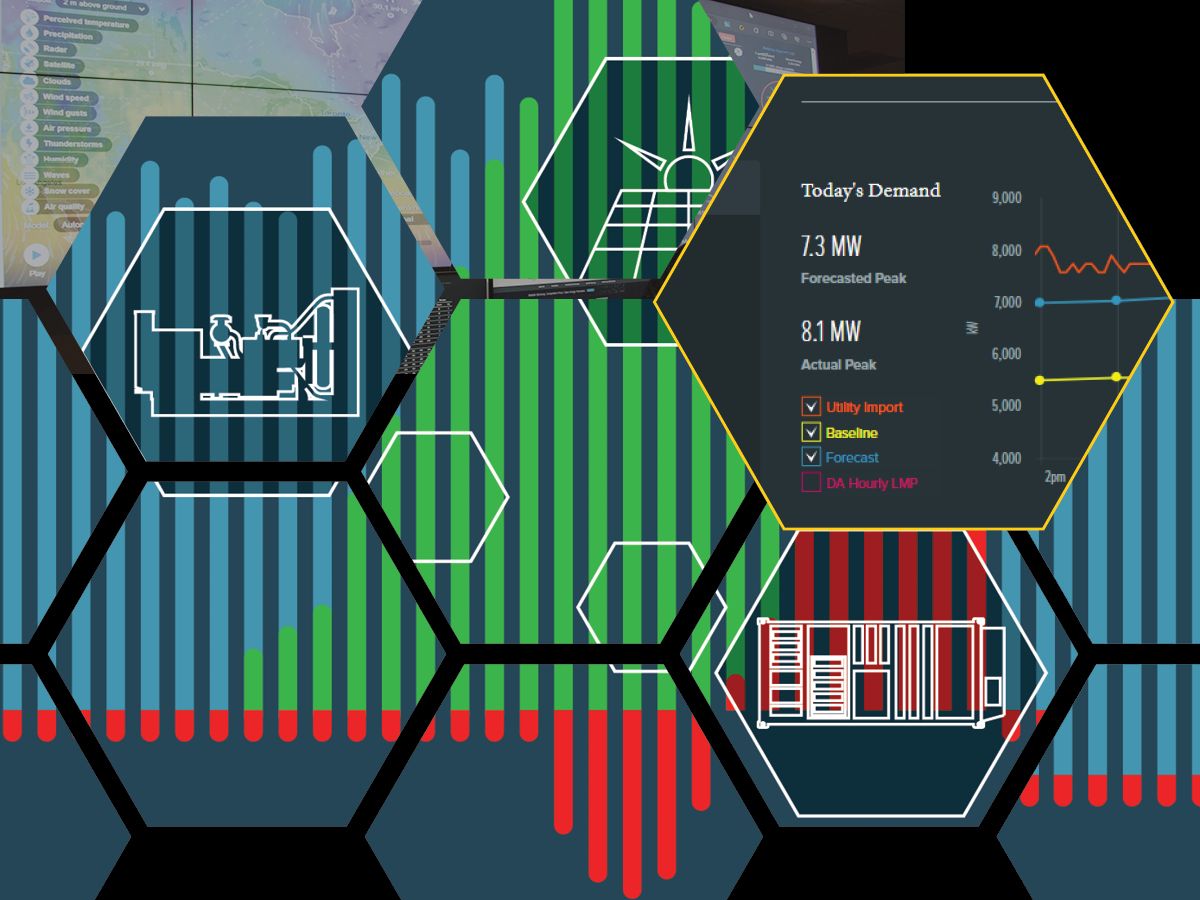
Scott: Distributed energy resource management systems (DERMS) help municipal utilities pinpoint the most valuable peak windows and dispatch assets more precisely, rather than running them longer than necessary.
Our rental units have the ability to provide real-time insight. It brings together energy trends, asset performance, and dispatch timing so customers can make smart decisions about when and how long to run their assets – and what that capacity is worth.
For example, a customer might have a five-month rental contract that costs about $500,000 and provides 10 megawatts of peaking capacity. Those units may only need to run around 35 hours during high-value peak periods. By using Cat AMP to target those hours, the customer could generate roughly $150,000 in value – offsetting a meaningful portion of the rental cost while keeping the assets available for backup.
Scott: Diesel gensets are still the backbone of rental power, mainly because they’re fast to deploy and easy to scale. In many situations, temporary natural gas connections aren’t practical.
Where energy storage comes in is flexibility. In certain scenarios, batteries can help manage load, smooth dispatch or reduce how long generators need to run. That can lower fuel use and wear while still meeting peak demand.
Rental solutions don’t all have to look the same. As the economics of peaking change, pairing gensets with energy storage and controls can give customers more ways to tailor solutions to their specific needs.
Scott: Rental power is often a good proving ground. The data collected during peak events helps municipal utilities understand their capacity needs and the economic potential behind them.
That’s where the reporting element of Cat AMP really shines. At the end of a peak event, customers can clearly see when assets were dispatched, how they performed and what financial value they delivered. With that knowledge, it’s easier to decide what comes next: continuing to rely on rental, investing in permanent assets or exploring hybrid solutions.
As peak demand becomes harder to predict, rental power for seasonal peaking helps municipal utilities stay ready and respond when it really counts. With Cat AMP, they can get smarter about when to run assets, avoid unnecessary runtime and capture value during the most important peak hours. That means rental power isn’t just there for backup; it can help offset costs and bring a bit more predictability to an increasingly unpredictable grid.
Big thanks to Scott Noyes of MC2 Energy Services for sharing his on-the-ground perspective. Want to explore your rental power options for seasonal peaking or learn more about Cat AMP? Get in touch with our experts today.

Related Blogs
-
The Brains Behind Efficient, Future-Ready Power
Whether you’re adapting now or planning ahead, your power system needs to flex with your strategy. That’s where an energy control system comes in. Like the smart thermostat in your home that automatically balances comfort and efficiency as conditions change, controls act as the decision-maker for your power setup — from individual assets to entire sites. The result: a coordinated system that continuously adjusts to meet your cost, carbon and reliability goals.
Learn More -
Delivering Excellence: Energy, Data and Savings
What do thousands of data points, one very busy power grid and an endless supply of sourdough pretzel nuggets have in common? They’re all part of a typical day for Claire Gramlich. With extreme weather, unpredictable demand and equipment spread across four time zones, it’s hard to call any day “typical.” But to get a sense of how Claire and her team keep power flowing — and costs down — for Cat AMP customers, here’s a look at one record-hot July day last summer.
Learn More -
Reliability Is An Inside Job
Maintaining reliable power is getting more complex. Aging infrastructure, rising demand and frequent severe weather all contribute to a less stable grid. Add the growing use of solar and wind - valuable resources, but inherently intermittent - and many organizations now depend on gensets to bridge capacity gaps and keep operations steady. And now, because of all these changes, gensets are running far more often than expected. Equipment once thought to start up once a year is now being called upon to run four or five times annually - a trend that continues to rise as grid instability grows.
Learn More -
Reliability and Resiliency: How Co-ops Can Achieve Both with Distributed Energy Resources
See how distributed energy resources and DERMS help co-ops build affordable grid reliability, resilience, and disaster preparedness.
Learn More


Your Business
 North America – English
Caterpillar Brands
- Caterpillar.com
- Contact Us
- My Marketing Preferences
- Site Map
- Cookie Settings
- Legal
- Privacy
- Do Not Sell or Share My Personal Information
- Accessibility Statement
- US-English
- © 2026 Caterpillar. All Rights Reserved.