
Grid Constraints Push Operators to Embrace Gas Power for On-Site Autonomy
Parts & Services
Sustainability
About
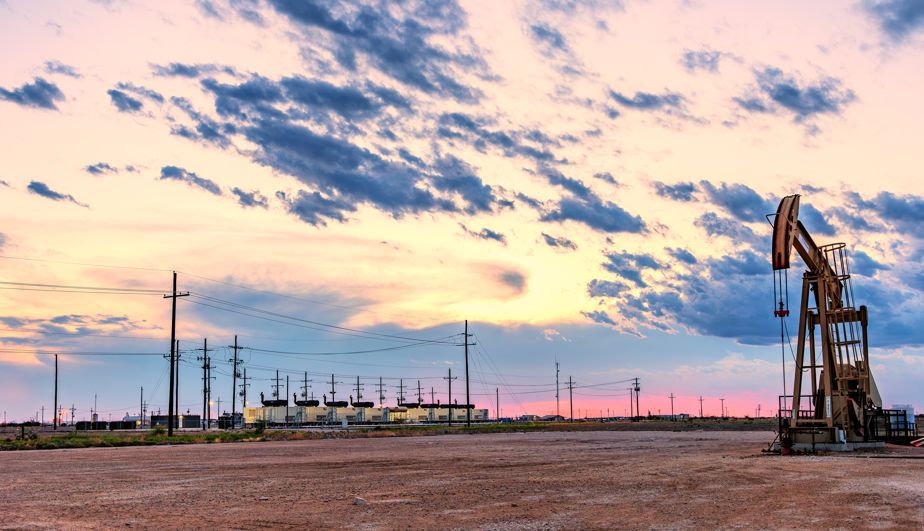
Rising energy demands are placing a greater strain on the electrical grid, impacting oil and gas operations. A growing number of oil and gas companies seek to tap into available utility networks to support growing operational power needs while advancing company sustainability objectives, however this increased consumption combined with the proliferation of data centers is quickly exceeding the grid’s capacity across the Permian Basin. Current grid interconnection delays and aging transmission infrastructure further complicate the use of the electrical network as companies contemplate how to power oilfield operations today and in the coming years.
According to Artem Abramov, senior partner and deputy head of analysis at Rystad Energy, the theoretical power demand across all U.S. oil and gas basins totals approximately 25 GW, with slightly less than half currently satisfied by grid connections. Between 2024 and 2034, the U.S. is expected to add more than 800 TWh of electricity consumption, with data centers and commercial facilities driving approximately 60% of that growth – competing directly with industrial users for available grid capacity. Underscoring this challenge, the Permian Basin has witnessed a 4 GW increase in average demand since 2021 which reflects a growth rate that’s unmatched by other load zones in the country1.
“Utilizing grid-based energy not only contributes to corporate sustainability objectives but also can impact OpEx and CapEx. Drilling companies that successfully connect to the grid have reported cost reductions of $0.30 to $0.40 per BOE,” added Abramov. As Abramov projects Texas commercial and industrial electricity prices to increase approximately 50% over the next five years, the cost differential between grid power and on-site power generation makes distributed power solutions an increasingly competitive and compelling option to meet oilfield needs for continuous, reliable energy.
of
On-Site Power Generation Solutions
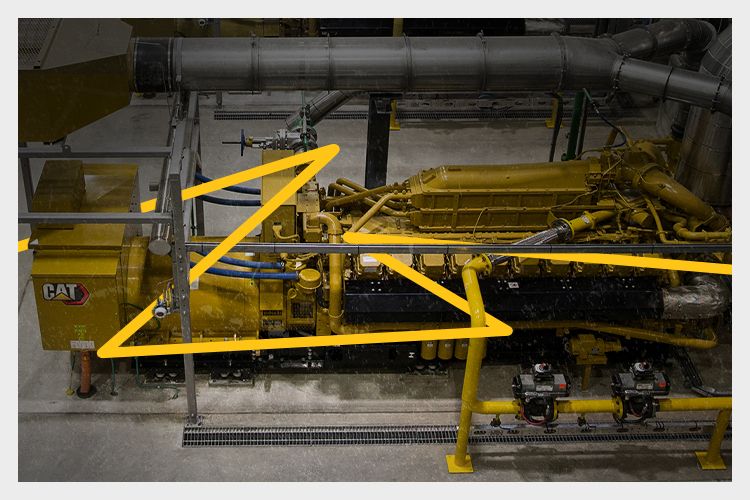
Natural gas-powered reciprocating engines and turbines are ideally suited to meet the power demands of the Permian Basin due to the abundance of gas in the region as well as both technologies’ field-proven reliability in remote oilfield environments. In addition to ensuring dependable energy and efficiency across varying elevation and temperature conditions, these power solutions are available today to mitigate delays in the field. Natural gas engines such as the Cat® G3250 and G3616 help oilfield companies reduce flaring by leveraging the flare to produce energy. These engines run on a range of gas compositions to provide flexibility while producing lower greenhouse gas (GHG) emissions compared to diesel solutions.
Solar Turbines’ gas turbines are ideal for mission-critical high-output operations requiring continuous baseload capacity. These turbines can generate up to 39 MW of continuous power, which sufficiently supports multiple drilling pads or large gas processing facilities. Gas turbines also offer higher power density compared to reciprocating generator installations.
Leveraging natural gas-powered assets in the oilfield not only meets companies’ reliability and cost savings needs but also helps eliminate project delays. As downtime isn’t an option in the 24/7 oil and gas industry, companies are unable to wait months or years for a grid tie. Gas gensets and turbines are available options that empower companies to adhere to project timelines and production commitments.
A Gas-Powered Future
As Rystad Energy anticipates the strain placed on the grid to continue for several years, upstream and midstream companies must secure pathways today that ensure access to dependable power for uninterrupted new and existing operations.
Gas-powered reciprocating engines and turbines deliver the self-reliance that contemporary oilfield operations require. Whether used as standalone solutions or part of a company’s site-specific microgrid, these technologies are field proven to withstand the rugged conditions encountered in the oil patch to deliver decades of dependable service and consistent energy. Given the robust growth anticipated for upstream, gas compression, gas power plants and other oil and gas operations in the Permian over the next decade, natural gas power generation is essential to support the basin’s role in the global energy industry2.
1 Rystad Energy. 2024. US as the next 'electrostate' and the role of the Permian Basin. https://www.rystadenergy.com/insights/us-as-the-next-electrostate-and-the-role-of-the-permian-basin
2 Oilprice.com. The Permian Basin is Fueling America's Electric Future. June 19, 2025. https://oilprice.com/Energy/Energy-General/The-Permian-Basin-is-Fueling-Americas-Electric-Future.html
Your Business
 North America – English
Caterpillar Brands
- Caterpillar.com
- My Marketing Preferences
- Site Map
- Cookie Settings
- Legal
- Privacy
- Do Not Sell or Share My Personal Information
- Accessibility Statement
- US-English
- © 2026 Caterpillar. All Rights Reserved.