
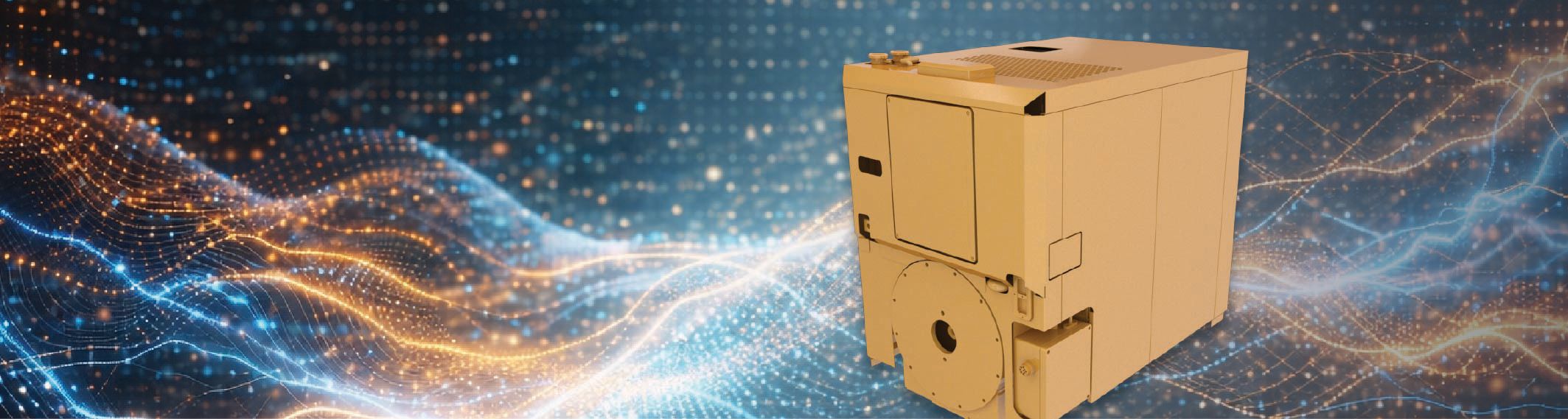
Electrification Without Reinvention
How BEPU Supports a Seamless Transition from Diesel to Electric

Innovation isn’t always about starting over. Often, it’s about taking what works and moving it into the future.
Science fiction has trained us to associate innovation with sleek machines and memorable names: WALL-E. HAL 9000. R2-D2. Let’s add a new one to that list: BEPU.
It’s not a character from a movie. It’s a real-world solution designed to make electrification simpler, faster and more practical for original equipment manufacturers. Short for Battery Electric Power Unit, BEPU is Caterpillar’s way of helping OEMs offer new power solutions without reinventing their machines.
More Power Options Mean More Complexity
Electrification is changing expectations for off-highway equipment. End users are asking for more choice: diesel where it still makes sense, and electric where performance, emissions, noise or indoor operation matter most. For OEMs, that shift creates opportunities, but it also adds complexity. Batteries, motors, inverters, onboard chargers and cooling systems all must work together seamlessly — and the pace of change in these technologies is fast.
Today, offering multiple power solutions often means designing multiple machine platforms: one based around a diesel engine, and another built for alternative fuels or electric power. That increases engineering effort, development timelines and costs across sourcing, service and support.
At Caterpillar, we believe electrification shouldn’t require reinventing the same machine.
A Proven Model for a New Era of Power
For decades, we’ve worked with OEMs to simplify one of the most complex parts of equipment design: power. Through our Industrial Power Systems Division — which includes both the Cat® and Perkins® engine brands — we provide fully integrated solutions that allow OEMs to focus on what they do best: designing and building machines.
That focus has served the industry well. OEMs don’t need to become engine experts or manage every aspect of powertrain integration themselves. They can rely on us to deliver complete, proven power units that fit into their equipment and support their customers around the world.
The Battery Electric Power Unit extends this model to electrification. It’s a compact, plug-and-play solution that can replace a diesel engine in the same space, with the same mounting locations and relative position in the machine. It brings the battery, motor, inverter, onboard charging, cooling and controls together, so an electric power unit can fit where an engine used to sit — and OEMs can use existing chassis platforms as they transition from diesel to electric.
4 Advantages for OEMs — and Their Customers
By solving the integration challenge at the power-unit level, the Battery Electric Power Unit helps remove unnecessary complexity and gives OEMs a clearer, faster path forward as power solutions expand. It offers:
- A true drop-in solution: Instead of maintaining separate designs for diesel and electric variants, OEMs can focus on one core machine architecture and offer customers choices based on application needs. That helps simplify engineering, parts procurement, service and support.
- Speed and simplicity: Electrification introduces new technologies and components that continue to evolve rapidly. Bringing these elements together into a single, packaged solution reduces the need for OEMs to invest in costly, time-intensive engineering projects. That can shorten development cycles and improve return on investment.
- A faster path to market: With less redesign and fewer engineering and sourcing hurdles, OEMs can offer electric options sooner, staying responsive as customer expectations, applications and regulations change.
- More flexibility to meet customer needs: Removing design and development barriers makes it easier for OEMs to deliver the electrification advantages their customer's demand. That could be zero tailpipe emissions, less noise, expanded application opportunities — even the potential to lower total cost of ownership by eliminating fuel use and reducing routine maintenance.
From Concept to Reality at IFAT
Caterpillar’s Battery Electric Power Unit (BEPU) is being integrated into a Doppstadt recycling screener, enabling a zero-tailpipe emissions solution designed for indoor, urban and highly regulated environments. The collaboration shows how OEMs can accelerate electrification while maintaining performance parity with diesel-powered machines.
The prototype will be showcased at Doppstadt’s stand FM.709/1 (outdoor area) at IFAT Munich, a Leading Trade Fair for Environmental Technologies from May 4–7, 2026. It’s a tangible example of our “electrification without reinvention” approach—adding electric capability to proven designs rather than starting from scratch.
Following the show, Doppstadt plans to begin field trials using the BEPU powered machine. Insights from real-world operation will help validate performance and inform how this solution evolves next.
One Step Toward What’s Next
Science fiction often imagines the future arriving fully formed. In the real world, innovation is built one step at a time and grounded in real machines, real applications and real customer needs. With the Battery Electric Power Unit, we’re taking one of those steps, extending a model that’s worked for decades into a new era of power.
BEPU may not be a character from a movie. But like the best ideas, it's designed to help shape what comes next.
Stay tuned.
Sean Oilar
Product Manager, Caterpillar Electrification + Energy Solutions Division
Sean Oilar is a seasoned engineering and product leader with more than two decades of experience at Caterpillar. A Purdue University graduate, Sean began his career in 2000 developing advanced diesel engine controls across multiple Caterpillar platforms before moving into engine platform leadership on the C175, 3500, and 3600/C280 series. Over the years, he has supported a wide range of industries—including electric power, rail, marine, oil & gas, defense, and industrial applications—through progressive roles such as Platform Team Lead, Platform Engineering Manager, and leader of large‑scale development programs.
Today, Sean serves as Product Manager in Caterpillar’s Electrification + Energy Solutions (E+ES) division, where he leads the Integrated Design Solutions team. He is focused on advancing innovative energy transition technologies that help customers meet their sustainability and operational goals. Known for his results‑driven approach, Sean is passionate about guiding cross‑functional product development teams to deliver customer value with urgency, technical excellence, and market‑leading quality.
Related Blogs
-
Learning in Real Time
Learn about how our experience in the field is driving our electrification efforts.
Learn More -
Innovation That Moves You Forward
Learn about how Caterpillar innovates by listening to our customers.
Learn More -
Fueling What's Next
Take a practical look at alternative fuels available for today's operations.
Learn More -
Innovations for Advancing Jobsite Energy Solutions
Read about two real-world examples of how a holistic approach helped construction companies navigate an evolving energy landscape.
Learn More -
Charging Ahead: 4 Questions to Ask Now
If you operate heavy equipment today — one machine or a fleet of hundreds — then you have some sort of refueling strategy in place. Maybe diesel gets trucked to your sites once or twice a day, so machines can fuel up and keep working with little interruption.
Learn More -
Going Electric? Go Digital, Too.
Think about what’s required to keep your diesel-powered machine running. For the most part, if you conduct regular preventive maintenance and keep it fueled up, you’re good to go. Things aren’t so simple with electric equipment.
Learn More -
Kicking Off Our Next Century of Innovation with the 972 Technical Demonstrator
2025 marks Caterpillar’s centennial year, and I can’t think of a better place to launch the celebration than CES 2025. Why’s that? Because innovation has driven our success — and more importantly, our customers’ success — for a century now. After all, Caterpillar was built on a breakthrough: Our founders revolutionized the work for farmers in the early 1900s by replacing the wheels on a tractor with tracks. The rest, as they say, is history.
Learn More -
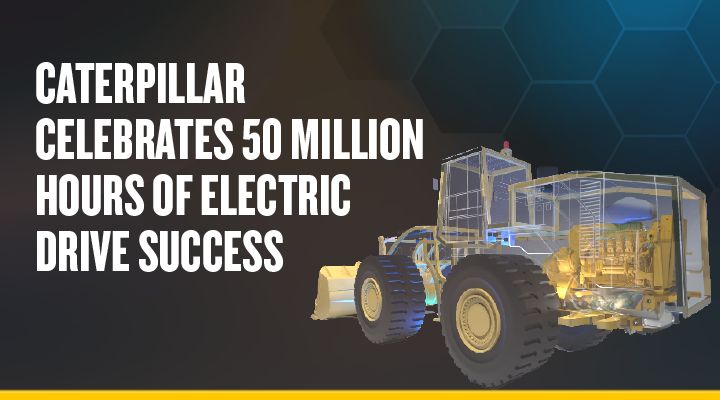
50 Million Hours of Electric Drive Success
Many of us think of electrification as a relatively recent trend. After all, it’s been less than 30 years since the launch of the first mass-produced hybrid vehicle (Toyota Prius) and just 15 since the debut of the first mass-market EV (Nissan Leaf).The fact is, from the mid-1990s through today, nearly 9,000 Cat® products with electric drivetrains have been working on customer sites. In 2024, that equipment topped 50 million hours of operation, which is equivalent to 5,704 years.
Learn More -
Holistic Solutions for Jobsites of the Future
See where electrification is headed and how you can have the most success in your energy transition journey.
Learn More

Your Business
 North America – English
Caterpillar Brands
- Caterpillar.com
- Contact Us
- My Marketing Preferences
- Site Map
- Cookie Settings
- Legal
- Privacy
- Do Not Sell or Share My Personal Information
- Accessibility Statement
- US-English
- © 2026 Caterpillar. All Rights Reserved.