
Innovation That Moves You Forward
Customer-Back, Value-Led Engineering for the Real World

At Caterpillar, innovation doesn’t begin with a breakthrough idea. It starts with listening — really listening — to our customers' pain points.
If you work in any heavy industry today, your challenges are becoming more complex. Energy demands are shifting. Loads are more dynamic. Regulations are expanding. Productivity pressures aren’t letting up. And yes, emissions are part of the conversation, but for many businesses, they’re not the main driver.
What I hear often is a different question: How do I meet these demands without disrupting my operation or increasing cost of ownership?
That’s where innovation at Caterpillar begins. You bring us your toughest challenges, and our job is to get to the true root of the issue, not just the symptom, because the right solution depends entirely on identifying the right problem.

Innovation Starts With Inquiry
There’s an old adage in engineering: You spend 80 percent of your time defining the problem and 20 percent solving it. I believe in that deeply. At Caterpillar, it’s part of our culture.
Organizations often come to us with what they think the issue is: I need zero emissions. I need a larger battery. I need fast charging. When we dig in, we often uncover something far more specific:
- Load profiles that swing faster than the infrastructure can handle
- Duty cycles that don’t align with the fueling or charging plan
- Operating environments that limit performance
- Economics that need to work from day one
So, we ask questions: Tell me more about that load. What are your constraints? What conditions are you operating in? These inquiries draw out the real problem and dramatically increase our chances of solving it right the first time.
This approach is one of Caterpillar’s biggest differentiators. Technology is widely available today. What’s rare is the discipline to see the big picture and the expertise to integrate the right mix of capabilities.
Technology is the Bridge — Never the Starting Point
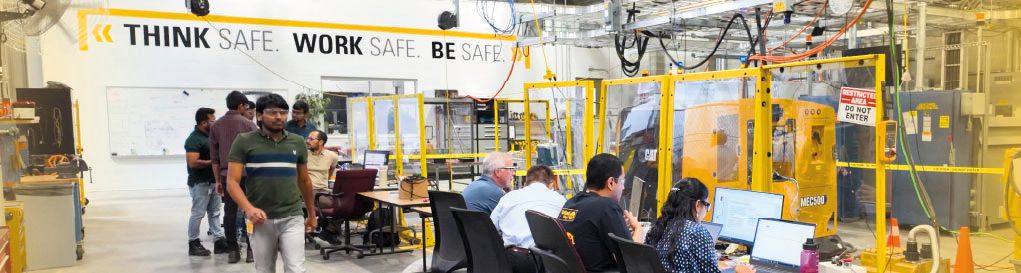
Once we define the problem, technology becomes the tool engineers use to create solutions that perform economically and reliably. Across Caterpillar, we have incredible tools at our disposal:
- Early learner machines working on real sites, feeding data to engineering
- Full-scale drivetrain simulator for battery-electric mining trucks
- Electrification and Power Conversion Innovation Center (EPIC) lab, where teams collaborate and refine prototypes
- Flex rig that replicates mining field issues without the need for a full-size truck or mine site
- Field support teams embedded with customers, identifying issues early and validating fixes
These tools help us model, test, replicate, improve and optimize. But what truly drives innovation is the passion of the people using them. Our engineering teams wake up every day energized by the chance to tackle questions that don’t yet have answers and to build things that haven’t been built before. The result is equipment, systems and technologies that are safer to work on, easier to service and more cost-effective to own and operate.
Real Customer Challenges We’re Tackling Together
Every industry faces its own version of the same reality: rising complexity with no room for disruption. Here are a few of the challenges you’re bringing us, and the kinds of solutions we’re building with you:
- AI-driven data centers: Managing fast, unpredictable load swings by integrating gensets, energy storage and advanced controls for peak shaving, resilience and efficiency.
- Railroads: Reducing fuel use and locomotive count with hybrid and battery-assisted propulsion that supports steep grades, handles dynamic loads and lowers operating cost.
- Marine operators: Powering ship hotel loads with battery systems that allow engines to run at lower speeds, improving the passenger experience and reducing fuel burn.
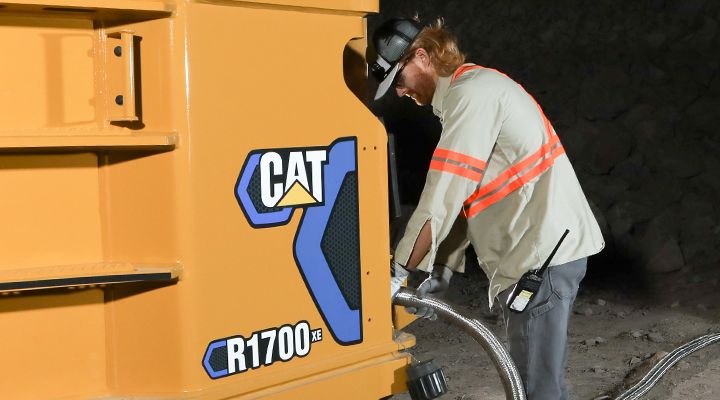
- Mining operations: Bringing safer, lower-emission performance underground with battery-electric loaders and haul trucks.
- Construction fleets: Testing diesel-electric, hybrid and full battery solutions that help lower fuel use and total cost of ownership while maintaining productivity.
Through these examples, we see that the technologies differ, but our goal remains the same: deliver practical, economical results in some of the most demanding applications on Earth.
Integration: Where Innovation Really Happens
Here’s the truth: Anyone can sell you a product. Not everyone can solve a problem for you.
Innovation isn’t just about the machine, the battery, the charger, or the genset. It’s about integrating all the pieces — power generation, energy storage, control systems, machines, digital monitoring — into a solution that works on your site, within your constraints and addressing your economic goals.
That’s where Caterpillar stands out.
We can model your load profile, simulate scenarios, size the right combination of technologies, and design a system that delivers value from day one. Integration is the innovation, and it’s what you’re telling us you need as your challenges grow more complex.
As we move into Caterpillar’s next 100 years, that’s what excites me most: not the technology itself, but what it makes possible when our engineers apply it to the realities of your operation.
We’ll keep listening. We’ll keep learning. And we’ll keep solving the problems that matter most to you.
Brian Dershem
Vice President of Engineering, Caterpillar Electrification + Energy Solutions Division
Brian Dershem is a vice president of engineering with responsibility for machine system integration and ePowertrain development in the Electrification and Energy Solutions (E+ES) division. In this capacity, Brian oversees the company’s efforts to deliver advanced electrified powertrains, high-voltage systems, analysis methods, and software controls for zero-exhaust emission of products and technologies. The E+ES division collaborates with other Caterpillar divisions to define product architectures that accommodate multiple power sources and drivetrains.
Brian previously served as chief engineer for Caterpillar medium wheel loaders (950-982) in the Earthmoving Division where he had responsibility for development of the Construction Industries segment electrification strategy including early development of zero-exhaust emission machines. He also previously served as chief engineer for the compact loader families of skid steer, compact track and compact wheel loaders in the Building Construction Products Division.
Brian joined Caterpillar in 1998 and has held several positions of increasing responsibility in engineering, new product development, and product and technology strategies. Brian has a history of being part of innovative teams from the early concept of Caterpillar’s compact product lines to the expansion of core product lines to support emerging markets, new growth segments and machine integration of fuel-efficient drivetrain solutions.
Brian graduated from Pennsylvania State University with a bachelor’s and master’s degree in mechanical engineering. Part of Brian’s background includes active and reserve duty military service in the U.S Navy.
Related Blogs
-
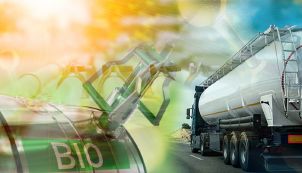
Fueling What's Next
Take a practical look at alternative fuels available for today's operations.
Learn More -
Innovations for Advancing Jobsite Energy Solutions
Read about two real-world examples of how a holistic approach helped construction companies navigate an evolving energy landscape.
Learn More -
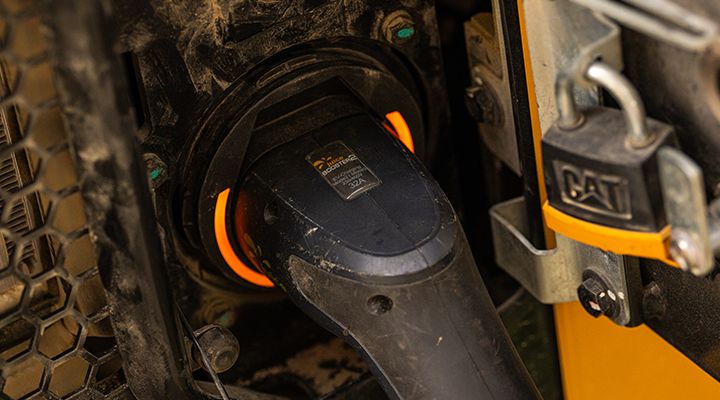
Charging Ahead: 4 Questions to Ask Now
If you operate heavy equipment today — one machine or a fleet of hundreds — then you have some sort of refueling strategy in place. Maybe diesel gets trucked to your sites once or twice a day, so machines can fuel up and keep working with little interruption.
Learn More -
Going Electric? Go Digital, Too.
Think about what’s required to keep your diesel-powered machine running. For the most part, if you conduct regular preventive maintenance and keep it fueled up, you’re good to go. Things aren’t so simple with electric equipment.
Learn More -
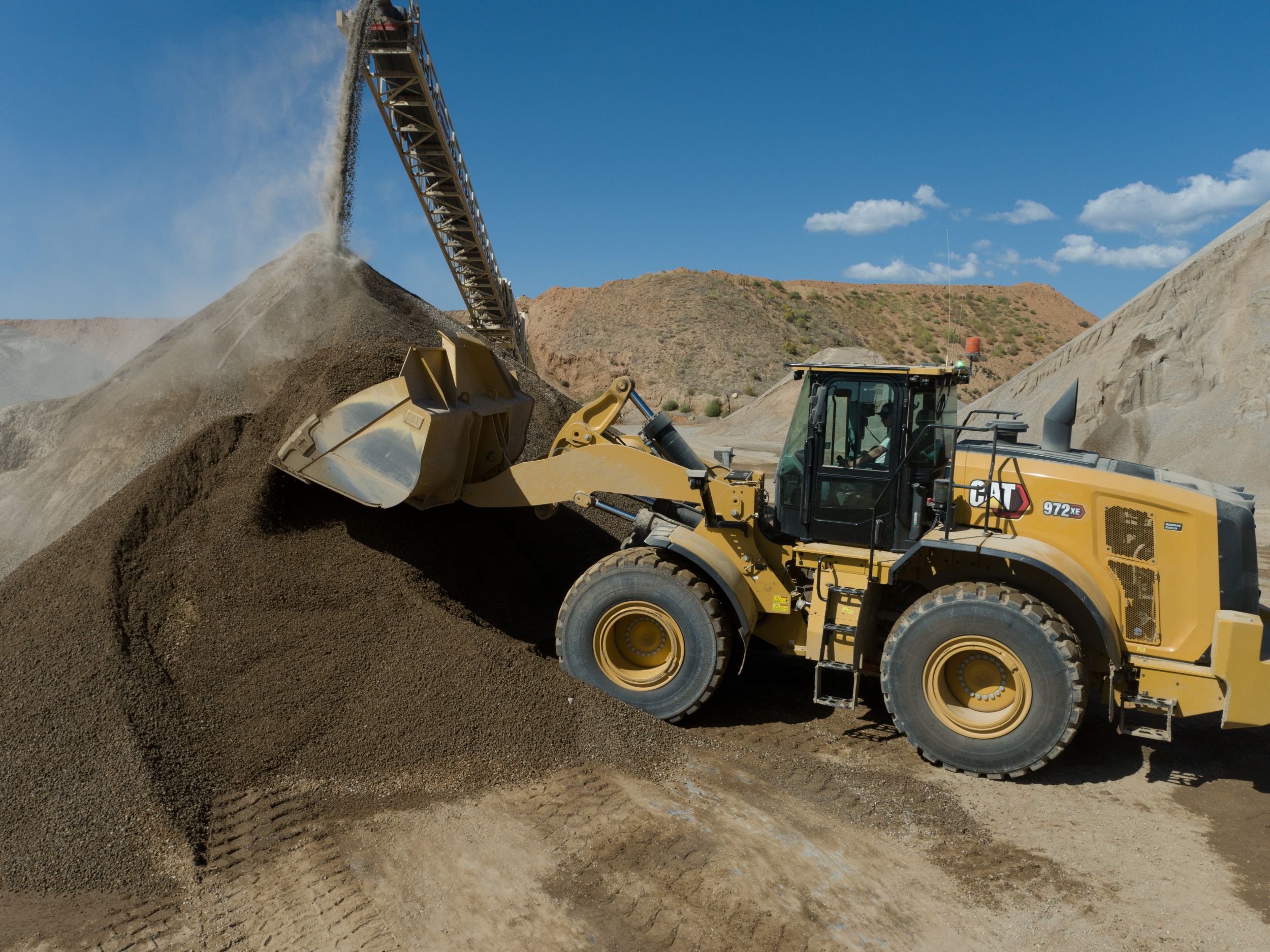
Kicking Off Our Next Century of Innovation with the 972 Technical Demonstrator
2025 marks Caterpillar’s centennial year, and I can’t think of a better place to launch the celebration than CES 2025. Why’s that? Because innovation has driven our success — and more importantly, our customers’ success — for a century now. After all, Caterpillar was built on a breakthrough: Our founders revolutionized the work for farmers in the early 1900s by replacing the wheels on a tractor with tracks. The rest, as they say, is history.
Learn More -
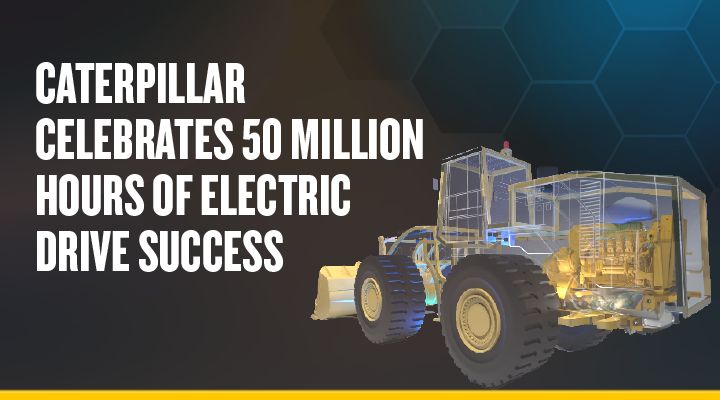
50 Million Hours of Electric Drive Success
Many of us think of electrification as a relatively recent trend. After all, it’s been less than 30 years since the launch of the first mass-produced hybrid vehicle (Toyota Prius) and just 15 since the debut of the first mass-market EV (Nissan Leaf).The fact is, from the mid-1990s through today, nearly 9,000 Cat® products with electric drivetrains have been working on customer sites. In 2024, that equipment topped 50 million hours of operation, which is equivalent to 5,704 years.
Learn More -
Holistic Solutions for Jobsites of the Future
See where electrification is headed and how you can have the most success in your energy transition journey.
Learn More

Your Business
 North America – English
Caterpillar Brands
- Caterpillar.com
- Contact Us
- My Marketing Preferences
- Site Map
- Cookie Settings
- Legal
- Privacy
- Do Not Sell or Share My Personal Information
- Accessibility Statement
- US-English
- © 2026 Caterpillar. All Rights Reserved.