
Cat® Linkage Pins and Bearings
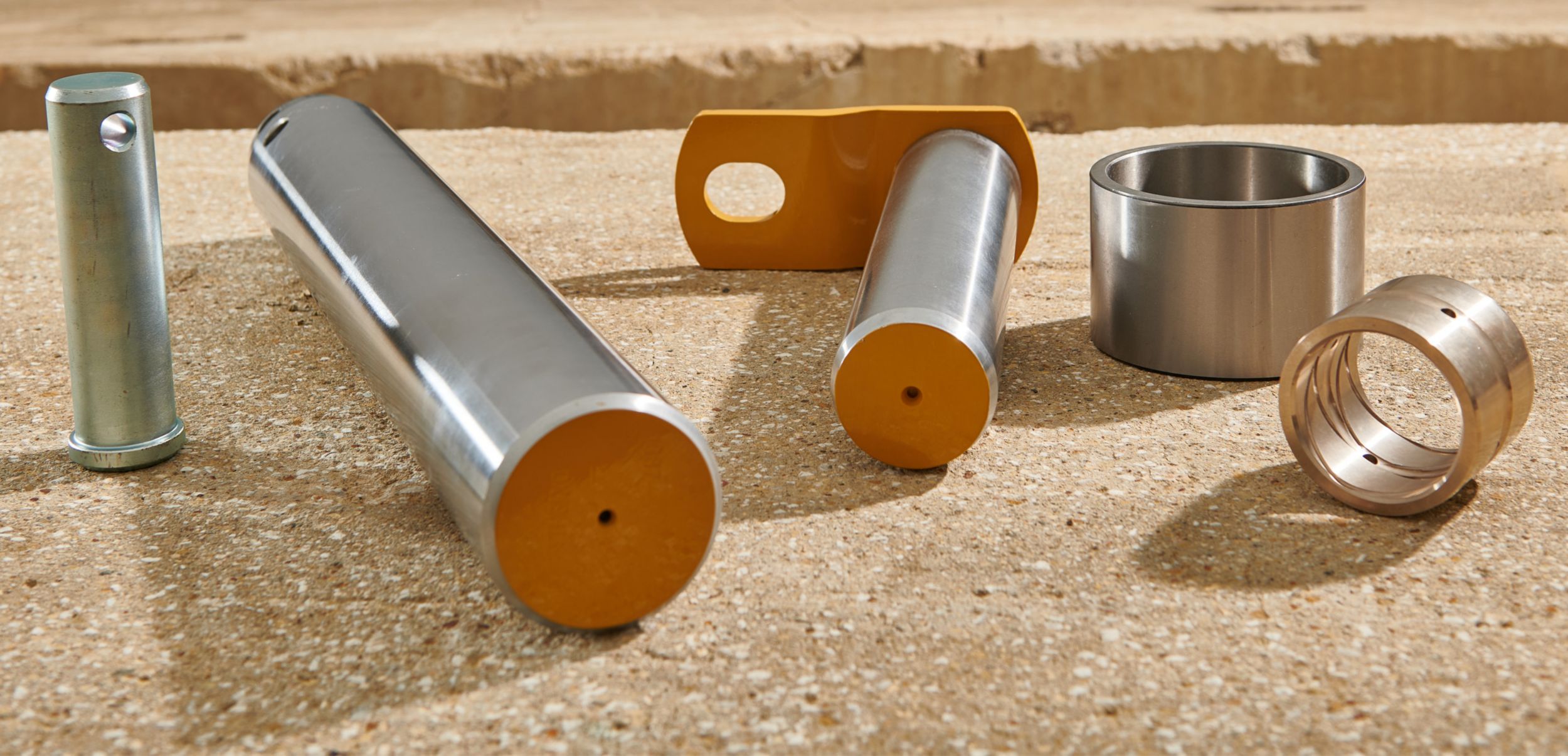
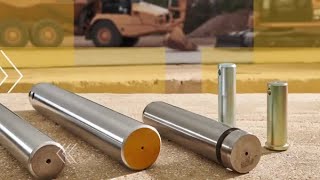
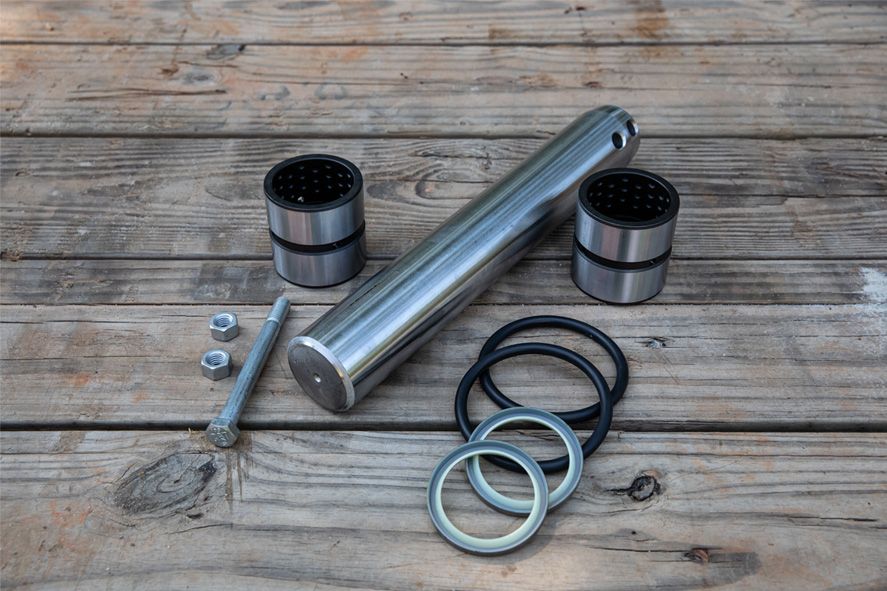
Cat® linkage pins and bearings keep your machine and your work moving, all day, every day. Cat linkage pins and bearings are designed with the machine to strict Caterpillar specifications. That means every joint is a precision fit delivering enhanced productivity and long life and keeping operating costs low.
Know What You Need?
Start Shopping
Discuss Linkage Pins and Bearings With Your Cat Dealer
Connect With Your Dealer
Overview
OUTSTANDING STRENGTH AND RESISTANCE TO WEAR
Cat linkage pins and bearings are designed for outstanding strength and resistance to wear from abrasive and high-load conditions. Because of their long-lasting performance, you get high productivity at a lower cost.
IMPROVED WEAR RESISTANCE
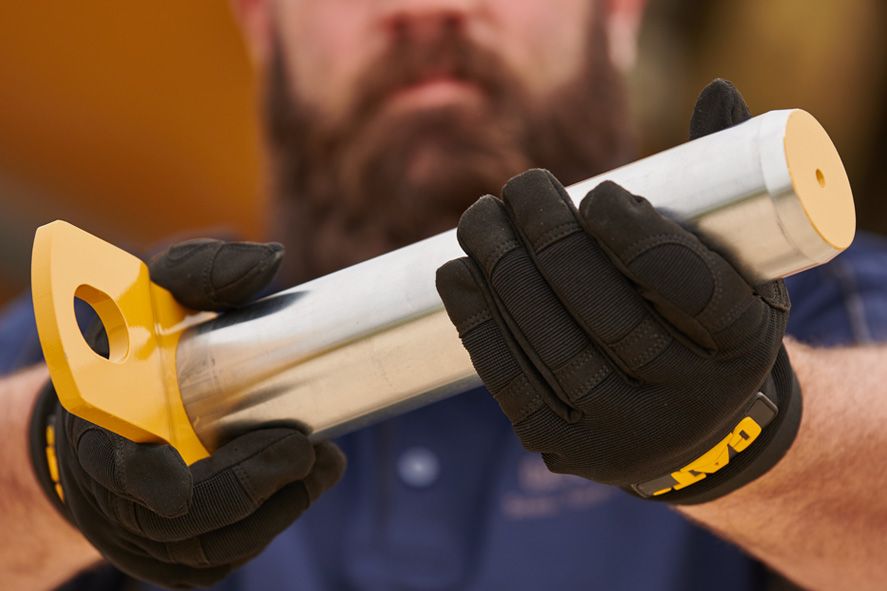
Cat linkage pins have enhanced strength and fatigue life. They are manufactured with increased heat treat depth for strength in high-load conditions. This high surface hardness leads to improved water resistance to abrasive wear.
PROVEN DESIGN
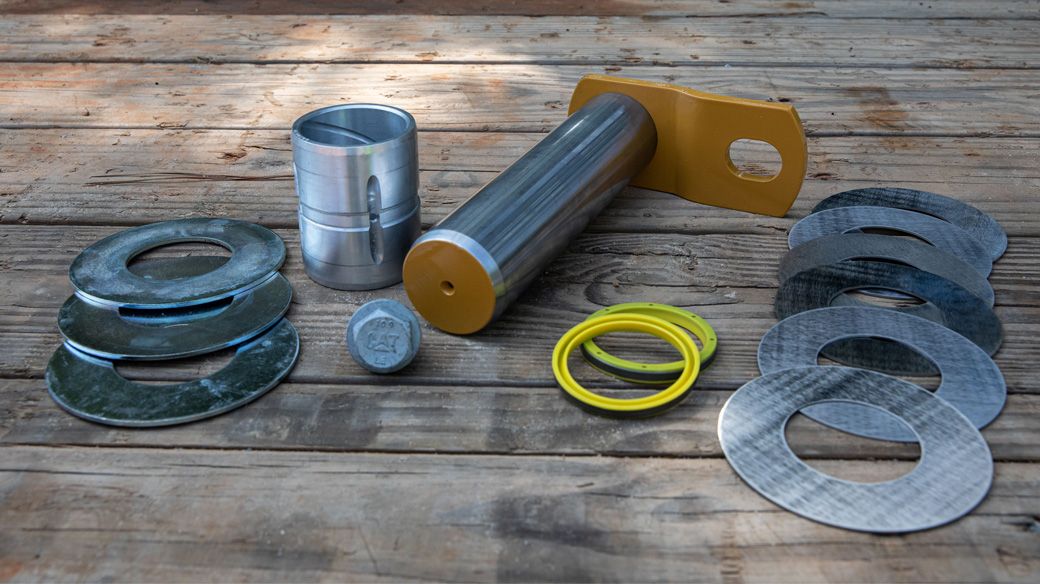
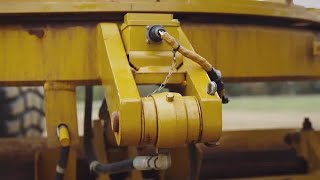
Cat linkage pins are engineered to match specific machine and application requirements. They are designed together as a system so the linkage pins, bearings, and seals fit within a fraction of a millimeter.
ULTRA-FINE FINISH
The surface of Cat linkage pins makes them highly resistant to abrasive wear. Ultra-fine surface finishes give smoother performance and lower wear rates.
DOWNLOAD RESOURCES
Caterpillar product brochures and other informational documents are available for your growing business.
Cat® Linkage Pins And Bearings
How do I know when to replace linkage pins?
Watch for excessive movement, visible wear (like grooves or galling), or difficulty maintaining tight tolerances. If the pin joint squeals, grinds, or feels loose during operation, it’s likely time to replace your linkage or bucket pin.
How often should I grease pins and bushings?
Grease daily or every 8–10 hours of operation to prevent wear. If working in wet or sandy conditions, reapply every 4 hours to protect against contamination and abrasion.
What causes linkage pins and bushings to wear out quickly?
Fast wear is usually caused by poor lubrication, dirt or debris buildup, misalignment, or using low-quality or incorrect parts. Regular maintenance and using properly hardened pins and bushings can significantly extend service life.
Can I reuse old pins and bushings after cleaning or machining?
If the pin is ‘like new’ after cleaning, it can be reused. Otherwise, reuse is not recommended. Even cleaned or machined pins may fall outside manufacturer specs, leading to poor fit, faster wear, and potential damage to your equipment.
What’s the difference between OEM and aftermarket pins and bushings?
OEM (Original Equipment Manufacturer) pins are built to exact specifications for your machine, offering fit, durability, and performance matched to your machine. Aftermarket parts may be cheaper but often lack proper heat treatment and dimensional accuracy, which can lead to premature failure.
How do I measure a pin or bushing to find the correct replacement?
First, check for a part number stamped on the pin or listed in your equipment manual. If unavailable, use calipers to measure the pin’s diameter and length, and the bushing’s inner and outer dimensions. Always compare with manufacturer specifications before ordering.
What are the signs that a pin or bushing needs replacement?
Common signs include excessive play, visible damage like grooves or spalling, difficulty maintaining alignment, or unusual noises during movement. These symptoms indicate the bucket pins or bushings are worn and should be replaced.
Are bucket pins and linkage pins the same thing?
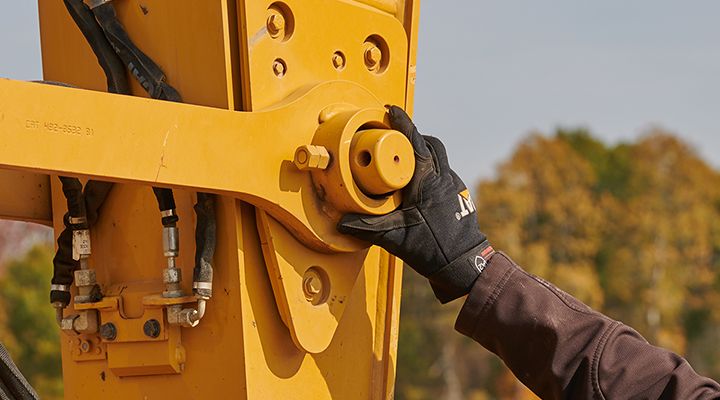
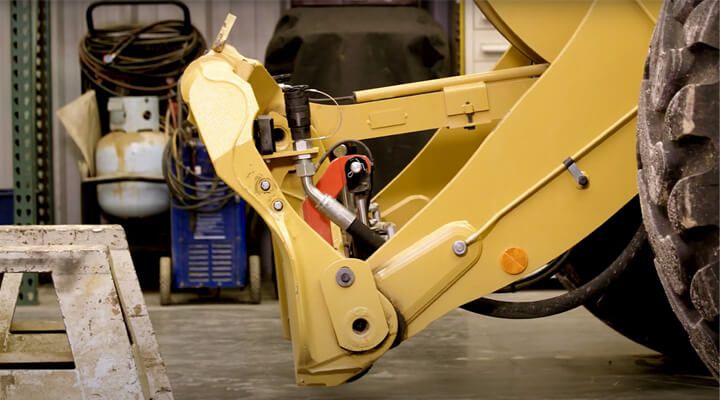
Bucket pins are a type of linkage pin specifically used to connect the bucket to the machine’s arm or linkage system. While all bucket pins are linkage pins, not all linkage pins are used on buckets. They can also be found in other pivot points on the machine. Many types of machines, including excavators, wheel loaders, motor graders, backhoe loaders, and dozers have linkage pins.
GALLERY
Cat® Linkage Pins and Bearings

Cat Construction Equipment Maintenance: Do It Yourself Articles
Proper maintenance keeps your equipment reliable and job-ready. Check out these articles for hands-on tips to extend the life of your machine.


Your Business
 North America – English
Caterpillar Brands
- Caterpillar.com
- Contact Us
- My Marketing Preferences
- Site Map
- Cookie Settings
- Legal
- Privacy
- Do Not Sell or Share My Personal Information
- Accessibility Statement
- US-English
- © 2026 Caterpillar. All Rights Reserved.