
How Do You Replace Cat® Coreless Hydraulic Filters Step-by-Step?
Replacing Cat® hydraulic filters on schedule and using the correct replacement procedure helps maintain hydraulic oil cleanliness, protect tight-tolerance components, and reduce the risk of premature pump or valve wear. Cat hydraulic filters are engineered specifically for Cat machines, which is why following proper service steps and using genuine Cat filters matters for long-term system performance.
In this article, we’ll walk you through how to replace the Cat® hydraulic filter on your equipment. We’re using a Cat 299D3 Compact Track Loader as an example, but the process is pretty similar across other Cat equipment. So grab your tools and your Operation and Maintenance Manual (OMM), and let’s get started.
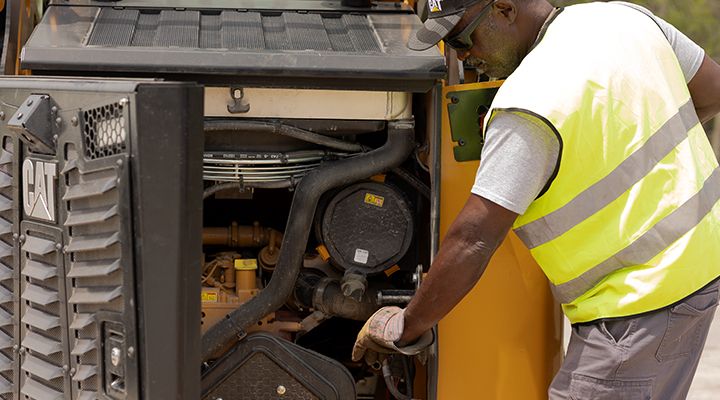
Why Does Proper Hydraulic Filter Replacement Matter on Cat Machines?
Proper hydraulic filter replacement matters on Cat machines because Cat hydraulic filters are engineered specifically to protect Cat hydraulic systems from contamination that causes premature wear and system inefficiency.
Unlike generic filters, Cat hydraulic filters are designed alongside Cat machines to maintain oil cleanliness levels required by tight-tolerance components such as pumps, valves, and hydraulic motors. When filters are replaced incorrectly or contamination is introduced during service, those system protections are compromised. These principles apply across the Cat lineup, including compact machines like the Cat 299D3 Compact Track Loader.
How Often Should You Replace the Cat Hydraulic Filter?
Cat hydraulic filters should be replaced at the service interval specified in the machine’s Operation and Maintenance Manual (OMM), which is typically based on operating hours and application severity. Machines operating in severe or dusty conditions may require more frequent filter changes than machines in light-duty applications.
What Safety Steps Must Be Completed Before Replacing a Cat Hydraulic Filter?
Before replacing a hydraulic filter, the machine must be parked on level ground, shut down, cooled, and fully depressurized.
- Park on firm, level ground
- Lower all implements to the ground
- Shut off the engine and remove the key
- Allow hydraulic oil to cool
- Relieve hydraulic pressure per the OMM
- Wear gloves and eye protection
Step 1: Park and Secure the Machine
Park the machine on level ground, lower all implements, shut off the engine, and remove the key.
Step 2: Relieve Hydraulic System Pressure
Follow the pressure-relief procedure outlined in the OMM to fully depressurize the system.
Step 3: Clean the Filter Housing Area
Remove dirt and debris from the filter housing and surrounding surfaces.
Step 4: Drain the Filter Housing
Open the drain port and allow oil in the housing to drain into an approved container.
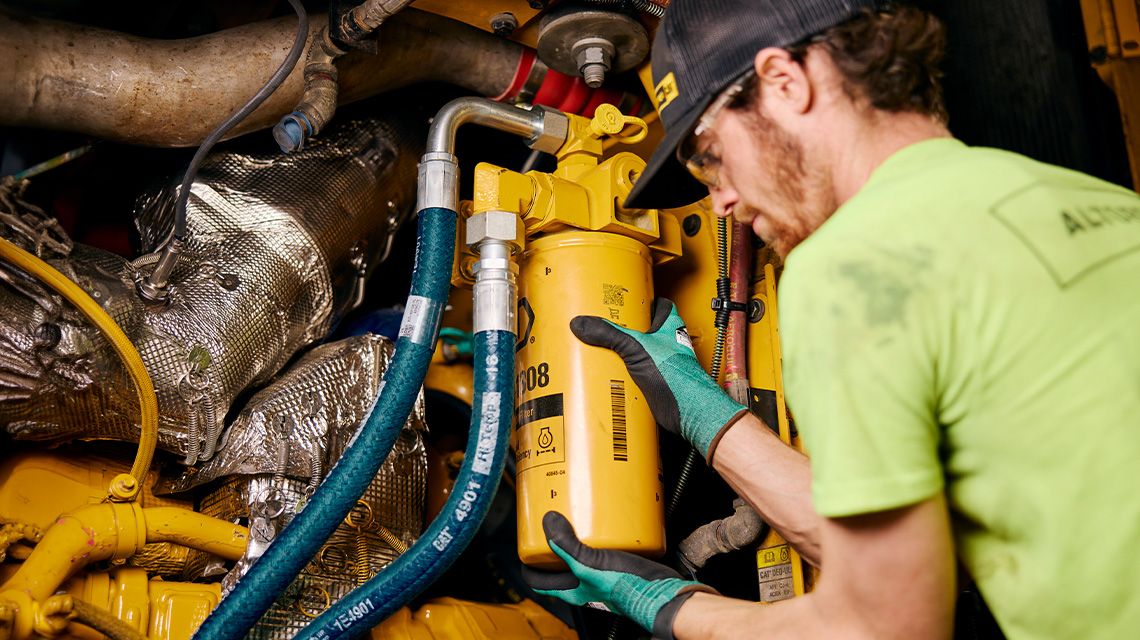
Step 5: Remove the Used Hydraulic Filter
Use a strap wrench to remove the filter housing and discard the used filter element.
Step 6: Inspect and Replace Seals
Inspect O-rings and seals and replace them as required. Lightly coat new seals with clean hydraulic oil.
Step 7: Verify Correct Replacement Filter
Confirm the new filter is correct before replacing.
Step 8: Install the New Cat Hydraulic Filter
Install the new filter element and ensure it is properly seated.
Step 9: Reinstall the Housing
Reinstall the filter housing and tighten it to the specification listed in the OMM.
Step 10: Check Oil Level and Inspect for Leaks
Bring the hydraulic system to operating temperature and verify proper oil level and leak-free operation.
Why Use Genuine Cat Hydraulic Filters?
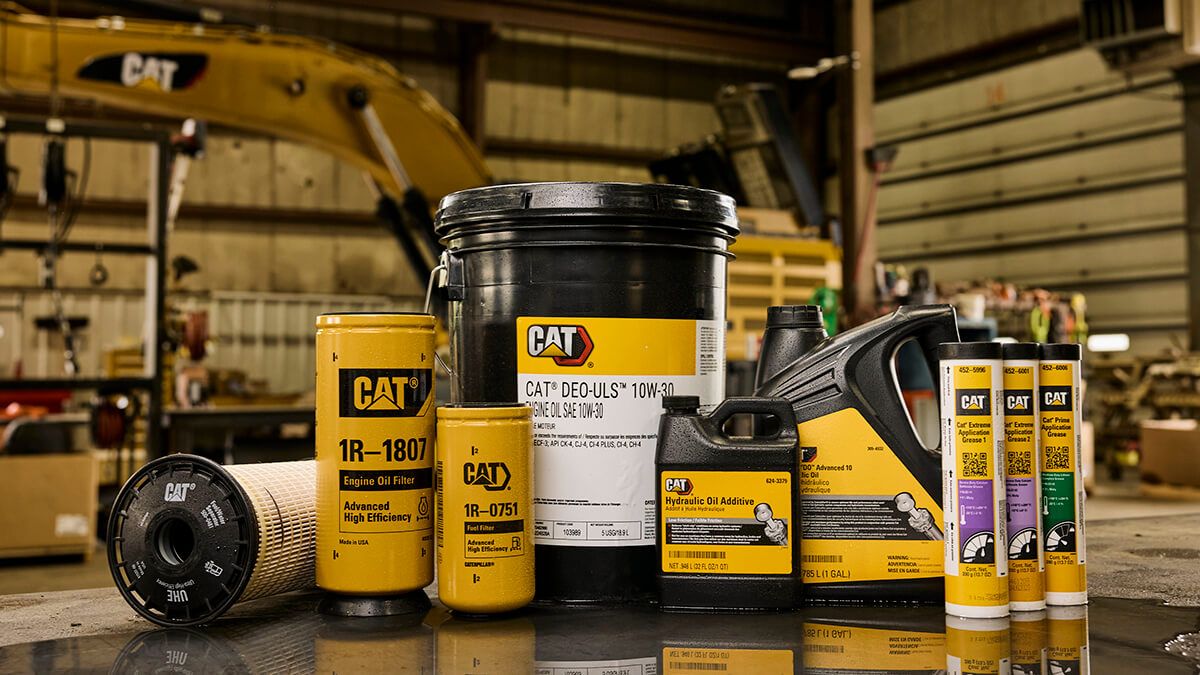
Genuine Cat hydraulic filters are designed specifically for Cat hydraulic systems to maintain required oil cleanliness levels and protect critical components. Cat filters are engineered alongside Cat machines and validated to support system pressures, flow rates, and contamination control targets across applications.
Which Cat Machines Use Similar Hydraulic Filter Replacement Procedures?
What Maintenance Checklist Should Be Followed After Filter Replacement?
Pro-Tip from the Shop
Allow the machine to sit for several minutes after shutdown before opening the hydraulic filter housing to let residual pressure dissipate and contaminants settle.
Cat® Hydraulic Filters FAQs
What happens if the Cat Hydraulic Filters aren’t replaced?
If Cat hydraulic filters are not replaced as recommended, contamination can circulate through the hydraulic system and accelerate wear on pumps, valves, and motors. Over time, this can lead to reduced hydraulic performance, unplanned downtime, and higher repair costs.
Your Business
 North America – English
Caterpillar Brands
- Caterpillar.com
- My Marketing Preferences
- Site Map
- Cookie Settings
- Legal
- Privacy
- Do Not Sell or Share My Personal Information
- Accessibility Statement
- US-English
- © 2026 Caterpillar. All Rights Reserved.