

How to Give a Safety Briefing at Home
Did you know that 9 out of 10 accidents are caused by unsafe behavior? Help keep your family safe by doing at-home safety briefings before family activities and home projects.
By Caterpillar | Updated: May 23, 2022
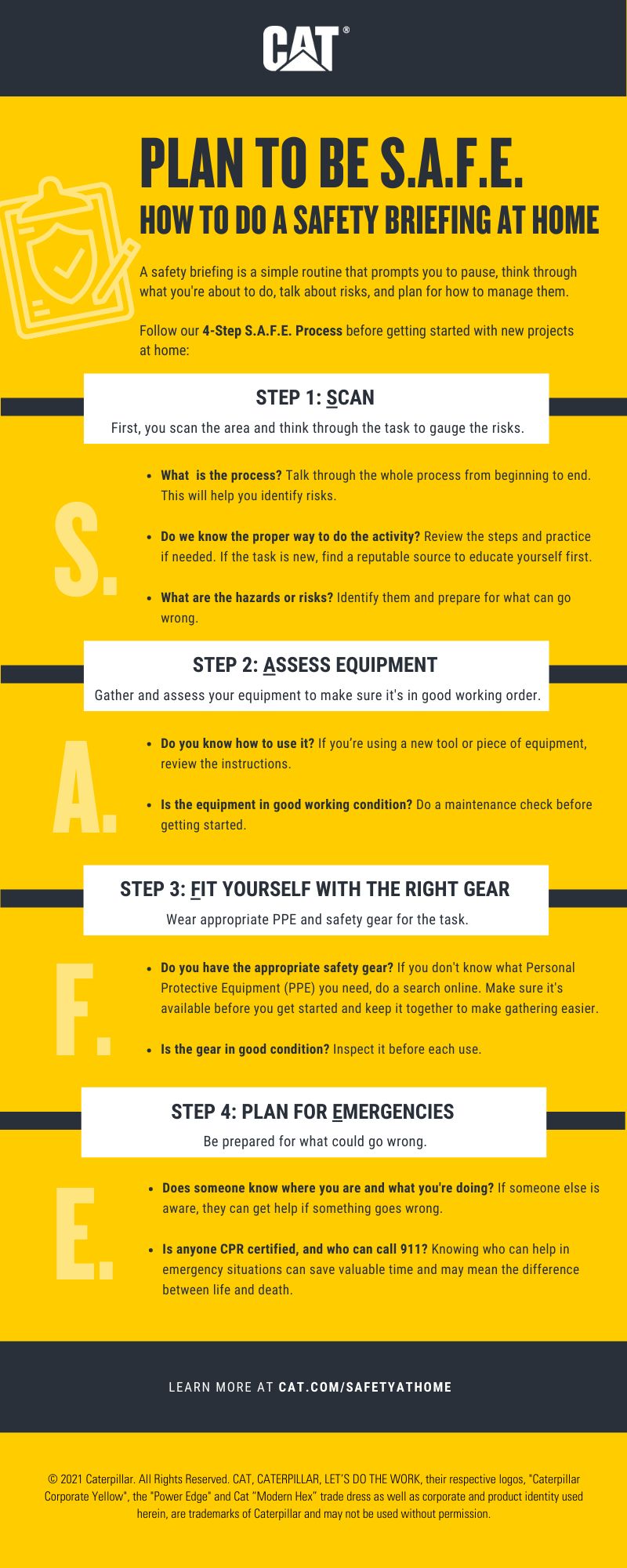
What is a safety briefing? A safety briefing is a structured conversation focused on safety.
Why do a safety briefing? 9 out of 10 accidents are caused by unsafe behavior. A safety briefing is a simple routine that prompts you to pause, think through what you’re about to do, talk about risks and plan for how to manage them. Done regularly, they will help everyone in your family have a safety mindset.
When should I do a safety briefing at home? On the jobsite, safety briefings are done before every shift. At home, it’s a good idea to do them before family activities, home projects or tasks that are new or could involve risk. You can also use a safety briefing to review emergency plans, such as your family's wildfire safety plan or pre-hurricane plan.
How to give a safety brief: A good place to start in creating a family safety plan is with our S.A.F.E. 4-step process. Discuss these questions with other members of your family before getting started. If you’re working alone, it’s still a good idea to mentally review the steps.
Scan: First, you Scan the area and think through the task to gauge the risks.
Assess: Second gather and Assess your equipment to make sure it’s in good working order.
Fit: The third step is to Fit yourself with the appropriate Personal Protection Equipment and safety gear for the task.
Emergencies: Fourth, make a plan for responding to Emergencies.
Step 1: Scan
Before you start, assess the task and area for any potential risks. For example, if you’re teaching your child to mow the lawn, you’ll want to talk through the steps they’ll need to take and identify hazards and what could go wrong.
Questions to ask:
- What is the process? Talk through the whole process from beginning to end. This will help you identify all the risks.
- Do we know the proper way to perform the activity? Review the steps and practice if needed. If the task is new, find a reputable source to educate yourself on best practices.
- What are the hazards or risks? Identify them and prepare for what can go wrong.
Step 2: Assess Equipment
Using the right tools and equipment not only makes the work easier but also helps keep you safe. Using a tool too large or too powerful can increase risk and put the operator in danger.
Questions to ask:
- Do you know how to use it? If you’re using a new tool or piece of equipment, review the instructions. You can usually find instructional videos on the manufacturer’s website. When teaching others, watch the video together, then demonstrate how to do it. Make sure to monitor their progress to ensure they can do it safely.
- Is the equipment in good working condition? Do a maintenance check on any equipment you’re using before getting started. That could be checking fluid levels on your mower, the stability of a stepladder or checking to see if you have a phone signal in case of emergency.
Step 3: Fit Yourself with the Right Gear
Personal Protective Equipment (PPE) is your last line of defense if something goes wrong. It can mean the difference between a scratch and a life-altering injury.
- Do you have the appropriate clothing and gear? If you don’t know what PPE items you need, a quick search online can help. Make sure it’s available before you get started. Keep it stored together to make it easier to gather.
- Is the gear in good condition? Inspect it before each use. Look for cracks, tears and deterioration with hard hats. Examine safety glasses for chips, scratches and scrapes. Gloves should be free of punctures and cuts. And work boots with worn treads or separation may need to be replaced.
Step 4: Plan for Emergencies
No one wants to think about the worst-case scenario, but we need to be prepared in case something goes wrong.
- Does someone know where you are and what you’re doing? If someone else is aware, they can get help if something goes wrong.
- Is anyone CPR certified, and who can call 911? Knowing who can help in emergency situations can save valuable time and may mean the difference between life and death.
Knowing how to give a safety brief and communicating the process to your loved ones is a great first step to making projects and activities at home safer. But it doesn’t stop there. Read more about safety at home at www.cat.com/safetyathome.
Related Stories
-
Developing a Safety Culture at Home
The safest jobsites are those that have a strong safety culture, but what about when those employees go home? Hear from Caterpillar safety expert Justin Ganschow on why employee safety behavior at home matters.
Read Our Safety Culture Q&A -
Managing Mental Health Issues in Construction
Michelle Walker is dedicated to addressing mental health issues in the construction industry. Her goal is to provide workers on any jobsite the resources they need.
Learn More -
Tips For Preparing a Business Disaster Plan
A natural disaster disrupts everything from your daily schedule to the ability of your business to continue operations. Read our tips for creating plans and preparing for the worst.
Learn More -
Safe Host Takes a Colourful Approach to Safety
Colour-coded equipment is used to create a safer work environment at a data centre in Switzerland.
Learn More



Get the latest stories sent directly to your inbox.
Your Business
 North America – English
Caterpillar Brands
- Caterpillar.com
- My Marketing Preferences
- Site Map
- Cookie Settings
- Legal
- Privacy
- Do Not Sell or Share My Personal Information
- Accessibility Statement
- US-English
- © 2026 Caterpillar. All Rights Reserved.