
The Hidden Cost of Cleaning Air Filters
Estimated read time: 6 minutes
The environments you operate in are likely filled with dirt, dust and debris. Air filters help keep these contaminants from entering your equipment’s engine, while cabin air filters help protect your health. They block dust, pollen and pollutants like silica from entering the cab. And, under the Occupational Safety and Health Administration’s (OSHA) silica standard, these filters help protect the health and safety of operators.
Filters are a low-cost, high-impact preventive maintenance shield. When engine air filters aren’t working efficiently, your equipment risks reduced performance, shortened longevity and costly damage.
Think of it this way; the cost of replacing a filter is minimal compared to the price of repairing or replacing your engine — or dealing with health issues.
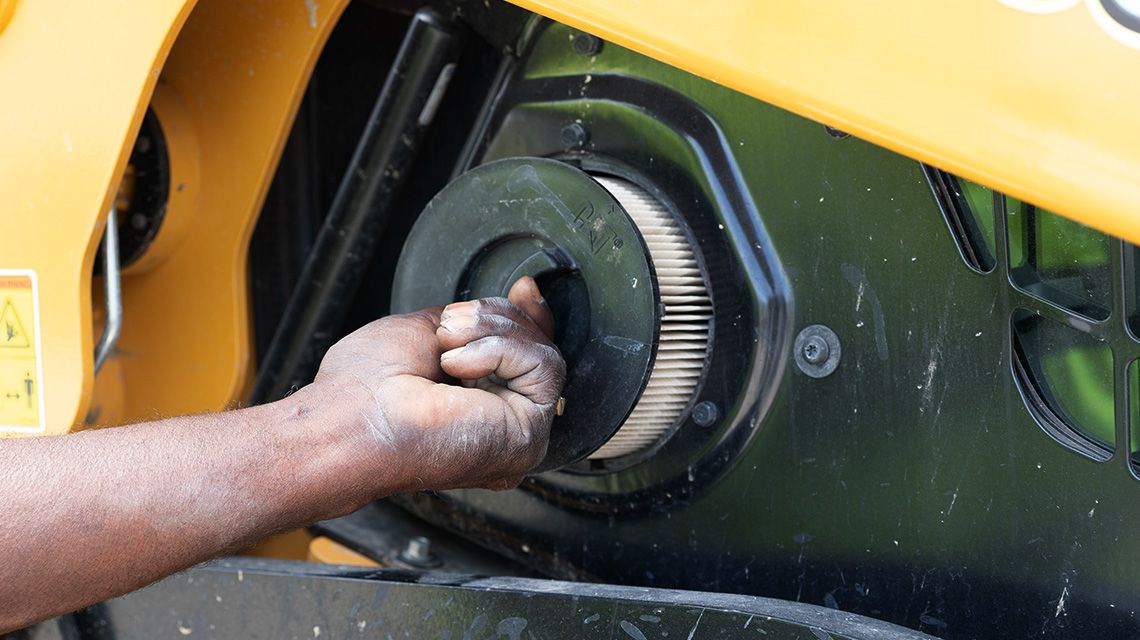
Avoid These Common Air Filter Cleaning Techniques
Contrary to popular belief, dirty filters help retain contaminants while still allowing airflow. Once the filter is overly full, airflow slows — and that’s your sign to replace the filter, not clean it.
Trying to clean air filters in heavy equipment can be a costly idea. Improper cleaning methods can actually damage the filter, which compromises its ability to protect the system it is designed to safeguard.
This can cause irreparable damage, increase fuel consumption, cause expensive downtime that far outweighs the cost of a new filter, and even incur safety violations that could increase the risk of exposure to dust. Common ways of cleaning that can all cause damage:
High-pressure air. This is one of the most common approaches to cleaning air filters with the common misconception that whatever is trapped in the filter media can be “blown out.” Using compressed air over 30 psi (as per the Operation and Maintenance Manual) can actually tear the media, creating tiny, unnoticeable holes. Also, the media could be damaged if there is accidental contact between the air pressure wand and the filter media. When reinstalled, the media can separate, allowing contaminants to bypass it and get into the system, potentially causing more critical expensive failures or downtime.
Tapping out debris. Tapping the filter against a hard surface like a tire or workbench can create small, undetected tears and damage the internal seals.
Scraping or brushing. Using a brush or tool to remove debris can break down the paper fibers and open up the filter to more contaminants and poor performance.
Do not clean with water.
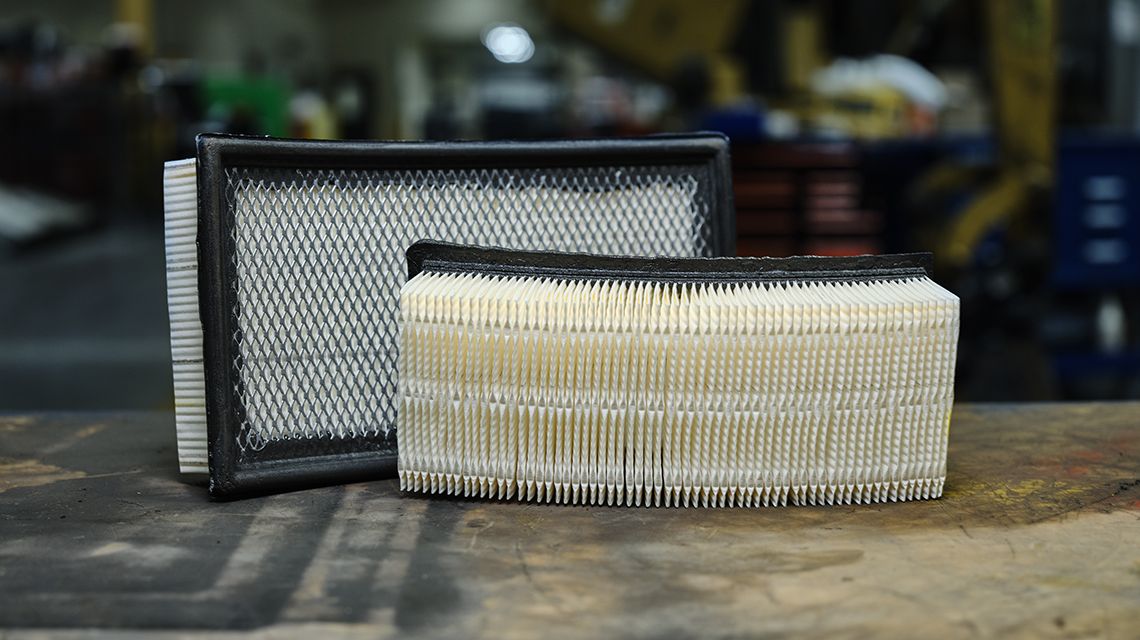
Damaged Filters Can Clean Out Your Wallet
If a damaged filter allows even a small amount of dust into your engine, the consequences can be expensive, not just for the component and system, but in downtime and lost productivity. If you decide to use a filter that is not new, you could pay the price for:
Severe engine damage. The primary function of an air filter is to prevent contaminants from reaching the engine's combustion chamber. If this protection fails, dirt and dust can wear down cylinders, pistons and other internal components, leading to catastrophic engine failure and extremely expensive repairs.
A cleaned filter would not have the full life of a new filter.
Increased fuel consumption. A damaged or clogged filter may have reduced dirt-holding capacity, becoming ineffective sooner. When the air flow through the filter becomes restricted, the engine must work harder and consume more fuel to maintain performance. An engine can burn significantly more fuel with a partially clogged filter.
Reduced equipment life. Consistent exposure to contaminants, even in small amounts, accelerates wear and tear on the engine, reducing its overall productive life, shortening rebuild cycles and potentially increasing your operating costs.
Unscheduled downtime. An engine failure can lead to hours or even days of unplanned downtime, halting production and costing thousands of dollars in lost productivity.
How Often Should You Change Your Filter?
While the initial filter replacement cost may seem high depending on your selection, it is a small price compared to the potential costs of engine damage.
Experts who know your equipment inside and out recommend you:
Stick to recommended service intervals. Follow the recommended service intervals for filter replacement in your Operation and Maintenance Manual (OMM). This is the most reliable way to protect your equipment. Many Cat machines now feature extended service intervals and recommendations to monitor equipment performance data as well as use S•O•S℠ Services fluid analysis reports for added insights.
Using restriction indicators. Some machines have a filter restriction indicator that signals exactly when a filter needs to be replaced. It can help you avoid premature replacement and maximize filter life.
Talk to your Cat dealer. Even if you want to do replacements yourself, your dealer can be helpful. They can help you get the right filters and train you on proper installation and replacement. You can also explore working with your dealer through a CVA that covers regular filter and fluid maintenance.
Your Cat dealer is ready to help you make the most cost-effective decisions for your equipment and your business. If it's time to replace any filters, find the exact ones you need for your equipment.
Filter Cleaning Answers
Q: How often should I change my engine air filter?
A: Follow your Cat OMM for service intervals and pay attention to any in-cab gauges and notifications.
Q: Is it cheaper to clean or replace a filter?
A: Caterpillar recommends that you do not clean your air filters. Cleaning may seem cheaper but risks engine damage and higher costs.
Q: What if I use a damaged filter?
A: Damaged filters let contaminants into the engine, leading to higher fuel use and expensive failures.
Q: Why not use aftermarket filters?
A: Cat filters are designed and tested for your Cat equipment. Aftermarket options may not provide the same protection.
Your Business


Caterpillar Brands
- Caterpillar.com
- My Marketing Preferences
- Site Map
- Cookie Settings
- Legal
- Privacy
- Do Not Sell or Share My Personal Information
- Accessibility Statement
- US-English
- © 2026 Caterpillar. All Rights Reserved.