

Cash Flow Management: Strategies For A Market Downturn
Cash flow is the livelihood of any business, especially in capital-intensive industries like construction and mining. When economic conditions shift, having solid cash flow management strategies in place could be the difference between business success and failure. Here are some tips for how to manage cash flow when revenues slow, but expenses don’t.
Estimated read time: 4 minutes
Cash Flow Management 101...
Cash flow simply refers to money moving in and out of your business:
- Cash inflows are funds coming in from project payments, sales and financing.
- Cash outflows are funds going out for expenses like payroll, equipment, materials and loan payments.
For construction and mining companies, cash flow management is crucial because your work often involves big financial investments in equipment, materials and labor. Late payments from clients, unexpected maintenance expenses or delayed project financing can leave you struggling to cover these costs.
Running out of cash could put a strain on your business relationships, harm your reputation and even open the door to more serious consequences, like bankruptcy. That’s why it’s essential to know your cash flow situation and make regular forecasts.
Managing cash flow wisely helps you make smart decisions, not only in good times, but also when business slows down.

How a Market Downturn Can Affect Cash Flow
During an economic slowdown, demand for your services may drop, meaning fewer projects and lower income. Even a small dip in revenue can quickly affect cash flow, as the funds you would normally use to cover expenses begin to shrink.
Unfortunately, expenses don’t drop along with revenue. Costs like equipment loans, equipment leases, insurance and office expenses remain fixed. Maintenance costs may even increase as aging equipment requires more repairs. In a downturn, these costs can create cash flow gaps — periods when you don’t have enough cash to cover your bills.
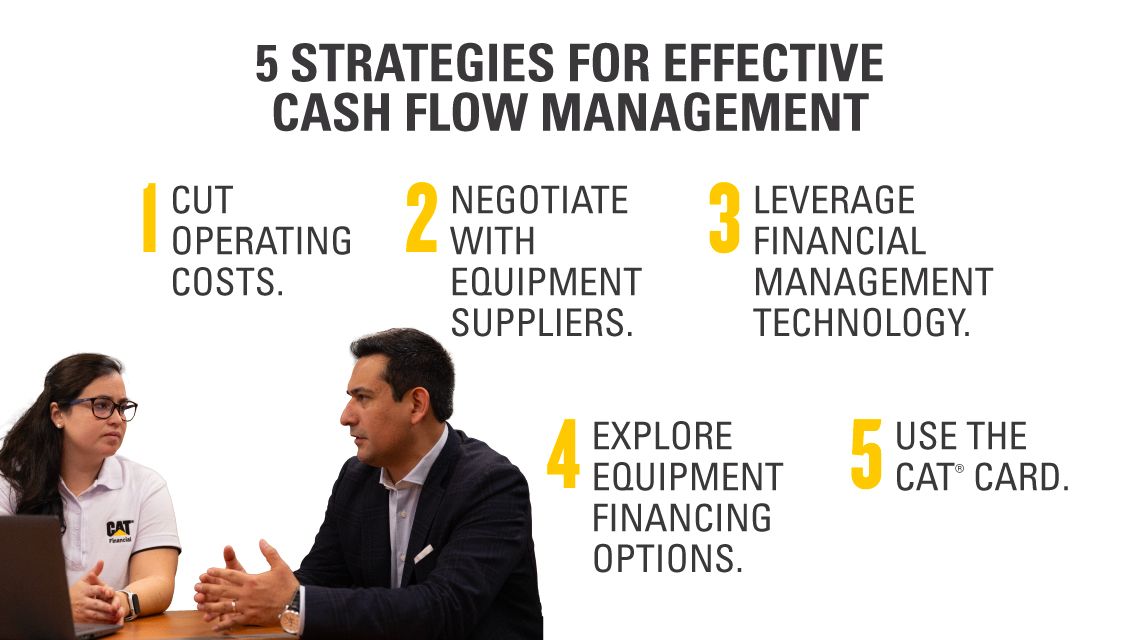
Strategies for Effective Cash Flow Management
So what can you do to keep the cash flowing when times are tough? Consider these cash flow management techniques:

Cut operating costs.
Can you streamline processes, cut non-essential purchases or find more affordable options for materials and services? Prioritize spending on critical items that keep your projects moving, quality high and employees safe — and delay or eliminate less critical services.

Negotiate with equipment suppliers.
Your suppliers can be valuable allies during tough times. Ask if they can extend payment terms to help you delay some costs. Even a few extra weeks can give you the breathing room you need.

Leverage financial management technology.
Software that tracks inflows and outflows can help you quickly identify where to cut costs or adjust spending. Equipment health management tools can help you predict maintenance, so you can schedule repairs before costly failures. Online resources, such as equipment financing calculators, are another great tool for weighing affordability and monthly payments before purchase.

Explore equipment financing options.
Financing can help you bridge cash flow gaps without disrupting your operations. Equipment loans can provide access to funds when cash is tight — or leasing may offer more flexibility without a down payment. Don’t overlook special financing offers for new, used or rebuilt equipment.

Use the Cat® Commercial Account.
Do you buy Cat parts, use a Cat dealer for maintenance and repairs or rent equipment? The Cat Commercial Account is a revolving line of credit you can use for these expenses — making low monthly payments when necessary, then paying in full when your finances allow. It’s a flexible cash flow management tool that can help keep your equipment and projects running smoothly. Another great benefit? Eligible accountholders earn Cat Rewards on qualifying purchases1 that can be put toward additional parts, service, rentals and more to further your savings.
Solid cash flow management strategies could be the difference between business success and failure.

Strategies for Long-term Management of Cash Flow
Cash flow management shouldn’t just be a short-term reaction to downturns. Long-term planning is a must. Here are some strategies that can help make your business more resilient:
Practice scenario planning:
Create different financial models based on potential market conditions. By forecasting best-case, worst-case and moderate scenarios, you can anticipate the effect of reduced revenues, rising costs or delayed payments and develop strategies to address them. This proactive approach can help you stay resilient even if the market shifts unexpectedly.
Build your cash reserves:
Set aside a portion of profits during good times to build a reserve that covers essential expenses like payroll, rent and equipment maintenance. A healthy cash reserve can help you weather downturns without halting operations, taking on high-interest debt or making costly compromises. It can provide peace of mind, too.
Lock in costs upfront:
Maintenance and repairs are unavoidable, even in tight times. A Cat Customer Value Agreement delivers maintenance parts for on-time service, and you pay today’s price for the length of the contract. A Cat Equipment Protection Plan locks in parts and labor costs for unplanned repairs caused by occasional defects in Cat material or workmanship. Both can be financed as part of your machine payment.
We’re Here to Help
At Cat Financial, we understand the balance between managing cash flow and growing your business. That’s why we offer a range of financing options, from equipment loans and leases to the Cat Commercial Account, to fit different needs. Our team can also help by modifying terms, setting up skip payments and restructuring debt for qualified customers.
To get started, talk to your local Cat dealer about financing options or apply for the Cat Commercial Account.
1See cat.com/rewards for eligibility, details, and terms and conditions.
Popular Articles About Cat Financial
Check out our blog for quick, insightful reads covering everything from small business equipment leasing and business equipment loans to tax tips and advice on growing your business.
-
2020-08-31 Caterpillar Pay for Use and How it Can Help Your Business
August 31, 2020
Discover how the Caterpillar Pay For Use™ program can improve your cash flow and offer more convenience and flexibility in your daily business operations.
Find Out More -
2024-01-01 The Ultimate Guide to Cat® Equipment Leasing
January 01, 2024
What’s needed for equipment financing? Learn key requirements like credit, cash flow, documentation, and equipment history with Cat Financial.
Learn More -
2024-06-12 Cat® Power Finance: An Overview
June 12, 2024
Cat® Power Finance offers tailored power equipment financing solutions for oil & gas, industrial, and rail sectors to support growth, cash flow, and operations.
GET DETAILS -
2025-05-06 Calculate Total Equipment Cost with Cat Financial
May 06, 2025
Use this financing guide to calculate your equipment cost and total cost of ownership.
Get The Guide


Your Business
 North America – English
Caterpillar Brands
- Caterpillar.com
- Contact Us
- My Marketing Preferences
- Site Map
- Cookie Settings
- Legal
- Privacy
- Do Not Sell or Share My Personal Information
- Accessibility Statement
- US-English
- © 2026 Caterpillar. All Rights Reserved.