

Read the full episode transcript
Intro (00:00):
Welcome to the Power Bytes Podcast, brought to you by Caterpillar Electric Power with your host, John Thomas. Each month we deliver the latest insights, trends, and cutting-edge tools to keep you ahead in the dynamic energy industry. Whether you're streamlining operations, embracing new technologies, or staying informed, Power Bytes is your go-to source. Join us as we explore innovation shaping the future and the resources you need to succeed. Welcome to Power Bytes, where energy meets innovation.
John Thomas (00:28):
Welcome to another episode of Power Bytes Podcast. This week, we're going to have a conversation with my friend George Bivens, and he's going to tell us why commercial and industrial leaders can't afford to wait for “perfect clarity.” What he's going to tell you a little bit about is how that reliability, peak demand, flexible energy, [etc.] is going to translate into real benefits for our customers in those spaces. George, thank you for joining us on the podcast today! And if you would, just do a quick introduction and tell us a little bit about your background in the industry and what are the things you're doing at Caterpillar these days.
George Bivens (01:05):
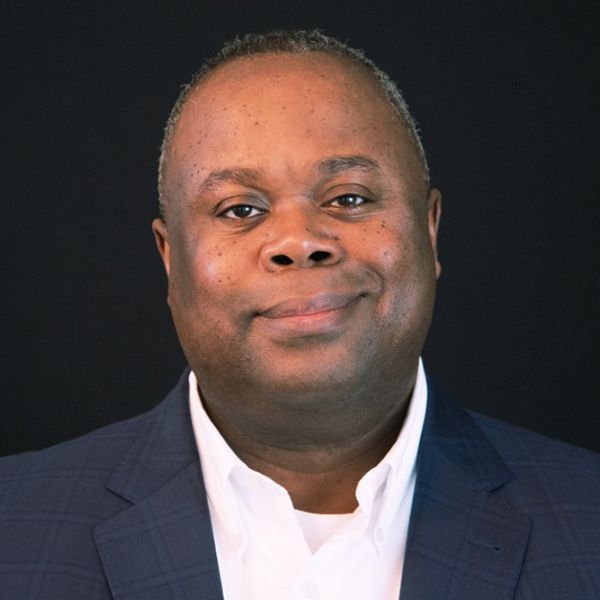
JT, thanks for having me. I'm George Bivens. I'm the North America sales director for Energy Services here at Caterpillar within the Electric Power Division. I've been in the energy industry [for] pretty much the majority of my career. I have a mechanical engineering degree. I’ve worked for various energy companies, either dealing with utilities or the customer side for the majority of my career. So I'm kind of an energy geek of sorts.
John Thomas (01:27):
Awesome. And when you say “energy services” … a lot of people might not be familiar with what that is. Can you tell us quickly what that is?
George Bivens (01:34):
Yes. The Energy Services Division within the Electric Power Division provides add-on services, if you will, to help our customers capture the value from their assets. We think about Caterpillar and the power division; we think about providing generator assets. But in addition to providing resiliency (which people think of our assets for), we help them unlock additional value by participating in market programs [and] energy programs or by helping them to get energy savings from their bill by the way they dispatch their assets – helping them to unlock value by connecting their assets to the grid.
John Thomas (02:10):
Awesome. Yeah, the way I always think about it is: you guys help them either make money off of the assets that they needed or help them really control those energy costs. Thank you for that. I appreciate it. Well, George put together a recent blog called “Moving Forward on Energy: Why C&I Leaders Should Act Now.” (And in “Caterpillar Land,” [C&I] stands for “commercial and industrial.”) And I had a chance to read this, and I thought that this would be a good episode for us to talk a little bit about the topic. Maybe you could just share with us, what is the core message in that blog?
George Bivens (02:41):
Well, JT, the core message is simple: waiting doesn't reduce energy risk, it actually increases exposure to it. Right now, we're in a dynamic environment where grid reliability, volatility in the energy space, [and] aging infrastructure are all moving simultaneously. When organizations “wait and see,” they're not standing still, they're actually increasing their risk.
John Thomas (03:06):
There's so much going on in the world right now that could make someone say, "I need to wait," right? In your blog, you said taking that wait-and-see approach doesn't really eliminate risk. You mentioned that it concentrates it. Can you bring that to life for us? What exactly do you mean by “it concentrates the risk”?
George Bivens (03:27):
Well, JT, as you mentioned, we're in a different, dynamic time. Costs are becoming less predictable, grid events are more frequent, [and] less localized assets inside facilities […] still age while all these different dynamics are taking place outside of their walls. This concentrated risk, however, shows up when the exposure builds quietly over time and then its manifestation may appear all at once. Picture a manufacturing facility, for example. They delayed upgrades to backup generation. They're fully exposed just to grid power at that point in time. They haven't addressed their peak demand behavior and their relationship to the grid. On a normal day, everything works fine, until a single hot afternoon, like we've had here (laughs) in the Northeast in recent weeks. At that point, grid stress leads to a voltage dip. Equipment could trip and shut down. Production could then halt 20 to 30 minutes.
(04:24):
Now you have lost production, scrap materials, a cost to restart their operations, and potentially even safety risks that could take place. So that one event could wipe out months or years of incremental optimization. That's what we mean when we say risk doesn't disappear; it accumulates and then could materialize in just a single moment.
John Thomas (04:47):
Well, that makes a lot of sense to me. You mentioned that there might be some ripple effects that you see first, besides the obvious downtime that you just mentioned. Can you tell us a little bit about that?
George Bivens (04:57):
When power's interrupted, the first impacts often go beyond what's obvious, which is downtime. That's noticeable by everyone. Yes, production stops, but then there's this ripple effect that includes a process instability. So maybe there were batches being run; that now could lead to quality issues. There could be stresses on the equipment from intermittent stops and starts. Some of the controls could be impacted, thus stopping a process in a strange place in its execution. Labor could be a challenge as well. Teams could sit idle or there could be a need to reset aspects of operation. Many impacts could come to the customers of that organization as well, where maybe the product interruption or production interruption could lead to delayed delivery to their customers. So this reliability is operational because energy is embedded pretty much in every workflow in a commercial industrial process, not just this manifestation that most see in the utility bill.
John Thomas (05:56):
Yeah, that is a great point, because I think most people can wrap their heads around downtime, right? Downtime means “I'm not producing.” But if you think about it, if you have an outage (to your point) and it upsets that process for a little bit, you might have a whole batch of material that was in the middle of production that spoils or goes bad. And so that's a good point because I jumped immediately to the downtime aspect. Thank you for clearing that up.
George Bivens (06:20):
Sure.
John Thomas (06:21):
In the blog, you said being right 90% of the time can still have this negative impact, whether it's one outage or a peak event. When you're talking to the leadership of these customers or organizations, how do you get them to think of the conversation [less as] an “energy-project [decision” and more as] a “true business-resilience” decision?
George Bivens (06:39):
When I speak to leadership, I frame another question. If your facility performs perfectly 90% of the time, but that 10% includes one outage or one peak event, you can lose the financial benefit of the entire year. That then changes the flavor of the conversation we're having from “How do we lower energy costs?” to “How do we protect revenue? How do we protect uptime? How do we protect our commitments to our customers?” That's the shift from an “energy project” to a “business continuity and resilience” strategy, which we help our customers with. Executives understand downside risk. Once they see that energy decisions impact their earnings, their throughput, and their customer [service level agreements] SLAs, it stops being an operational line item and then becomes a strategic priority for them.
John Thomas (07:31):
Can you give us an example of that, where you've seen that happen?
George Bivens (07:35):
Sure. If you think about it, almost every C&I team has a moment where their peak demand becomes real to them. It's typically in a single summer billing cycle where they see a charge that's multiple [times] higher than what they expected. And then they ask, "How did that happen?" What they then learn is that one interval, often 15 minutes, sets a demand charge for them. And in many markets, it can influence future pricing structures for the next year. The key insight that most organizations miss is that peak behavior today can shape tomorrow's cost structure. So if you don't actively manage your load during peak events, you're effectively locking in a higher cost going forward. That's why managing your peak isn't a reactive exercise, it should be considered as strategic.
John Thomas (08:25):
When you talk about “managing the peak demand,” I'm not sure that everybody understands how that can be accomplished. What are some ways – some examples – of how that peak demand can be managed?
George Bivens (08:35):
Well, certainly that's a good question, JT. This starts typically with a monitoring strategy – helping the end user have an idea of where their energy's being used, ideally down to their particular process level, so they can see the impact of the decisions they make on their operations. Then you enable that further with smart controls – either controls on their generator assets or distributed energy resource assets, or even the way they operate their processes, identifying where their pockets of load that might be able to be either shut down or curtailed or just the operation schedule even shifted. Those are ways that we can help enable. Looking at what's taking place with energy pricing as well, as their load profile for that time period, we can provide signals to them on when they should enable these controls to change the way they operate the facility. Again, by either shifting load, turning off processes, or bringing on distributed energy resources that can take some of the load off the grid.
John Thomas (09:31):
For all of us as listeners, think about it: if you've got a smart thermostat at home, some of our local utilities will let us know, "Hey, it's a hot day in the middle of the summer, and we're going to actually try to dial down your air conditioning in the house. It might get a little warmer in your house, but it might help your bill [and] reduce energy consumption during that peak." So that makes sense.
George Bivens (09:51):
That's exactly what we're enabling – the very exercise you mentioned, monitoring those conditions [in live time], watching prices and loads, and then translating that into a signal for these commercial and industrial customers to make these changes become somewhat transparent to them. Very similar to the example you mentioned with residential thermostats.
John Thomas (10:09):
Yeah. In your blog, you also talked about a flexible or adaptable energy strategy. And that was important for these leaders of these businesses. When you mentioned that flexible and adaptable energy strategy, how does that translate to what the person is doing at their facility?
George Bivens (10:29):
I'll start off by saying what it isn't. When we say “flexible,” it could imply complexity to some people, but it's anything but. It really is about having options. What does that look like? This could be on-site gas generation or energy storage, things of that nature. There's also distributed energy resource management systems, along with intelligent controls. Those help give real-time optimization and dispatch. As well as dispatch services that bring those pieces together, bringing the intelligence to those other building blocks. And then there's scalable infrastructure. So those systems that you would expand instead of replacing, knowing that, for example, in a commercial industrial instance where maybe they have a manufacturing facility, they're adding production lines, and they know their electrical loads will increase. So building a system with that in mind, where you don't overspend today – but you buy those pieces that could then allow for adaptation or expansion as we move forward.
(11:25):
For a leader who doesn't want to “bet the farm,” so to speak, they would start first with their critical loads, then maybe add these modular capabilities, and then layer controls and optimization. There's a starting point for everyone, right? That way they're improving their resilience immediately, but then they're also giving themselves room for future flexibility as time goes on.
John Thomas (11:45):
Yeah, flexibility from a growth standpoint, flexibility from additional assets. Does fuel flexibility play into that as well?
George Bivens (11:53):
Having a flexible portfolio helps. As mentioned, maybe a gas generator and battery storage, also having solar, having those hybrid systems that can complement gives them a little bit of a hedge against the risk of a single fuel source and gives them some added flexibility.
John Thomas (12:08):
Gotcha. If someone's listening to this and thinking, "Okay, I get it. I probably shouldn't wait because that may introduce some additional risks that I hadn't been thinking about. And I hear you loud and clear, I need to be flexible and adaptable with my energy strategy.” But they're not really sure where to start with all of that. Walk us through: what is the starting point? How do you start having that discussion about how to get this executed?
George Bivens (12:36):
That's a good question, JT. And that's a real circumstance. It starts with a strong assessment, looking at the site, looking at the existing infrastructure, the condition of it, but also the age. Because the age leads to things like, "Can I get spare parts?" Also looking at the critical loads, identifying what those loads are, being aware of what the rate structure is and their cost exposure, the different parts of the grid, if you will. Understanding the financial element of their electrical exposure is important. And then also visibility into energy data and controls. Having those, that insight, can help you because what it means is being able to identify what truly drives their peak demand. They might not know which loads are critical or which are discretionary. They may not know about what parts of their processes are most vulnerable to interruptions. And that gap is usually where the biggest opportunity and also their biggest return lives.
John Thomas (13:28):
This has always interested me when we talk about any kind of an energy assessment for a site. What's the best way for them to gather information and be ready to make that assessment go smoothly?
George Bivens (13:41):
The electric bills will answer the question. It'll tell us where their peak demand is. It'll tell us what rate structure they're on. It'll give us information about where their costs come from. And sometimes that might identify which loads are critical, but because maybe there are emergency circuits if they do have backup already. You can look at things like that that can help you ascertain for design conditions what parts the load [was] critical. Sometimes there's already monitoring in place and sometimes there isn't. Doing that assessment is identifying if there's existing monitoring; is it at the points that are most interesting or will they need to augment their monitoring by adding some sensors to capture data?
John Thomas (14:17):
Yeah. Well, and I would guess that a [follow-up] question about the energy bills would be, for how long? You just need it for six months? Do you need it for 24 months?
George Bivens (14:28):
Twenty-four is nice. Twelve is workable. Uh …
John Thomas (14:31):
Okay. (laughs) More information the better, right?
George Bivens (14:35):
The more, the better! At least a year would be good because that shows us the impact of their load over the course of the year. And then ideally when we're doing an assessment for feasibility, for what technologies to apply, and what programs to participate, actually capturing their – what we call – “8,760 data.” Their interval data for the year for their main service entrance will help also as we're doing that assessment. And that's something we can get from a utility in a lot of cases or if they have a control system that monitors at that level.
John Thomas (15:03):
Alright. I’ve got to ask it. “8,760,” where does that come from? What is that?
George Bivens (15:07):
Basically, it's the interval data for the hourly interval data broken down into one interval.
John Thomas (15:11):
Hourly. Okay. Alright. Well, we talked a little bit about the flexible and adaptable energy strategy, and you mentioned intelligent controls. As the regulations and energy costs and everything else shifts, how do those choices help a facility stay nimble in the face of these things that might be making them want to wait?
George Bivens (15:30):
Well, in simple terms, if you think about the modular assets, units that can be scaled or bolted on, they let you scale as conditions change. So you're able to add on capacity as processes change or other things. The multiple fuel options reduce your dependency on the single source. And then intelligent controls [are] really about how do you enable the plant or facility to respond to those signals that are coming from the grid. But they give them the ability to adapt to those things. Having each of these different building blocks under this intelligent control allows you to connect an asset that's “orphaned” to be responsive to the grid and having the signals from it so that this site now can take greater control of their outcomes.
John Thomas (16:16):
Well, that helped me, George. Because when I was hearing “modular assets,” I was thinking more [along the lines] of, is there an asset that you can add more modules to, to add more capability to it? You're actually talking about modular assets from the standpoint of adding additional energy assets on a site as the energy needs change. Do you have a real-world example of where that has happened that you can share with us?
George Bivens (16:40):
There's a site in the southeast in the United States where just this happened. It started out as a site where generation was applied and then it scaled as the needs changed, solar was added to that same location, and then again the dynamics changed, the process continued to change, and then storage came along as well that helped augment the system. All this was then incorporated into the smart controls that then allowed decisions to be made on: When do you run the generators? When do you discharge batteries? When do you allow the solar to charge the batteries? Really giving flexibility and choices so that this facility could be more in control. That software enabled them to be experts at their process but also be confident that their process could be protected by a system that acted with their priorities in mind.
John Thomas (17:29):
Yeah. That's really key, right? Because not everyone's an energy expert. Having some intelligent controls that can automatically make that switch from maybe diesel or natural gas generation to reducing the diesel and generator runtime because you're utilizing solar. That's a great example of a site taking a flexible strategy by “adding modular assets” to increase capability and grow as their needs grow over time. To close us out, if you could give our leaders one piece of advice to help them move from being passive to actually being proactive and doing something today, what would that be?
George Bivens (18:09):
Start with a question. If the grid doesn't perform the way they expect it [to], are they comfortable with the business impact that that makes? If the answer's “no,” or they're not fully accepting of it, then it's time for them to take action. Because not making a decision is still a decision, and it usually means they're accepting a risk that's not manageable.
John Thomas (18:31):
“Not making a decision is still a decision.” I love that. Well, George, thank you so much for your time today. I did appreciate your blog. It was really great to be able to cover that topic today, so thank you so much for joining us. Hopefully, we'll get to talk again in the future. And for our listeners, thanks for listening and we hope you hear us again soon.
Outro (18:50):
Thanks for tuning in to the Power Bytes Podcast. If you enjoyed the show, head on over to cat.com, and check out Electric Power for more exciting content. Let's power tomorrow together.
 North America – English