

Read the full episode transcript
Intro (00:00):
Welcome to the Power Bytes Podcast, brought to you by Caterpillar Electric Power with your host, John Thomas. Each month, we deliver the latest insights, trends, and cutting-edge tools to keep you ahead in the dynamic energy industry. Whether you're streamlining operations, embracing new technologies, or staying informed, Power Bytes is your go-to source. Join us as we explore innovation shaping the future and the resources you need to succeed. Welcome to Power Bytes, where energy meets innovation.
Steve Gupman (00:29):
Welcome! We're going to attempt to answer a relatively simple question: Is the current model that utilities use capable of taking us where we need to go over the next 5 to 10 years? We all know the growth in demand: there's electrification...I would be remiss if I didn't mention AI data centers, right? That's what [everyone on the] panel here has to talk about a little bit. That demand growth is coming. We've got extreme weather events. We know Winter Storm Fern. There's still a situation in the Carolinas, right? More and more, that's hitting. There's a constraint on our ability to add capacity. And all of those things [added] together feel [like] things are getting stretched very thin.
Steve Gupman (01:04):
What I'm going to ask the panel today to examine is – maybe challenge the traditional way that utilities think and offer some insights into how we might add some innovation, how we might better prepare for the next 10 years.
Steve Gupman (01:16):
What do we need to do to make sure that the grid in 2035 suits us all and is where it needs to be? My name's Steve Gupman. I'm the Director of Grid and Energy Services at Caterpillar, and I'm joined by an excellent panel today. I'm excited because we've got a range of perspectives (I think) to address this problem. So, David Ellis has worked in utilities. He's got the traditional utilities perspective. Scott Ungerer is a venture capitalist with a specialization in energy technology. And then, Dean Musser has been an entrepreneur and technology leader for the last 35 years. So, why don't we kick it off? David, do you want to introduce yourself?
David Ellis (01:51):
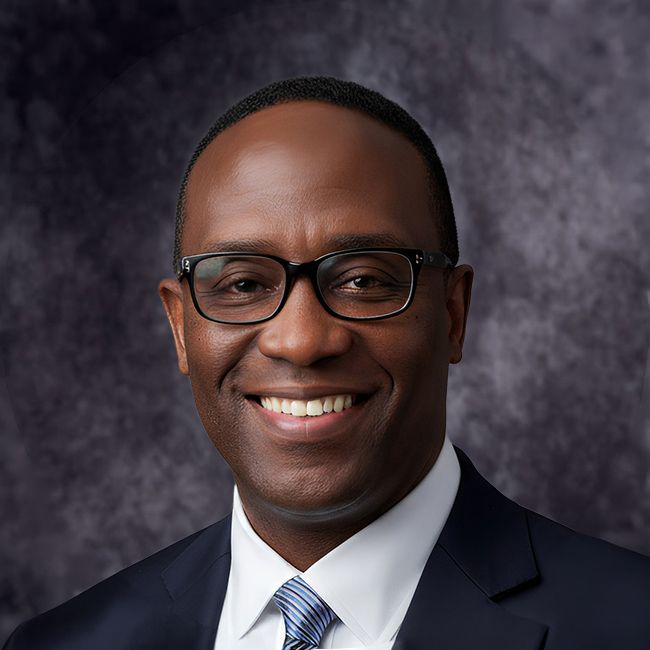
Sure. Thanks, Steve. My name's David Ellis. I've spent time as CEO of a regulated utility, Entergy New Orleans, and also as their first chief customer officer in the Gulf South. And I'm working as an independent consultant today. Good to be here.
Scott Ungerer (02:05):
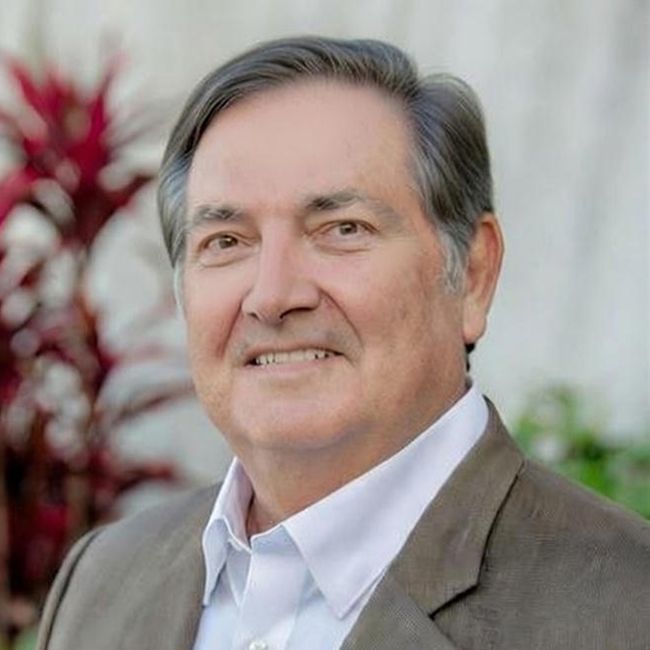
Good afternoon. I'm Scott Ungerer, founder and a managing partner at EnerTech Capital, a venture capital firm that's been doing what we do for 30 years. And it's investing along the value chain from downhole sensing to energy consuming devices. We stay away from large CapEx, but it's mostly technology, which translates to a lot of software. My first 16 years in the industry was with an electric utility. So, I made the transition very successfully, and I was happy I did. And I'm still trying to figure out what we do and how it can be most impactful for utilities and the customers.
Dean Musser (02:41):
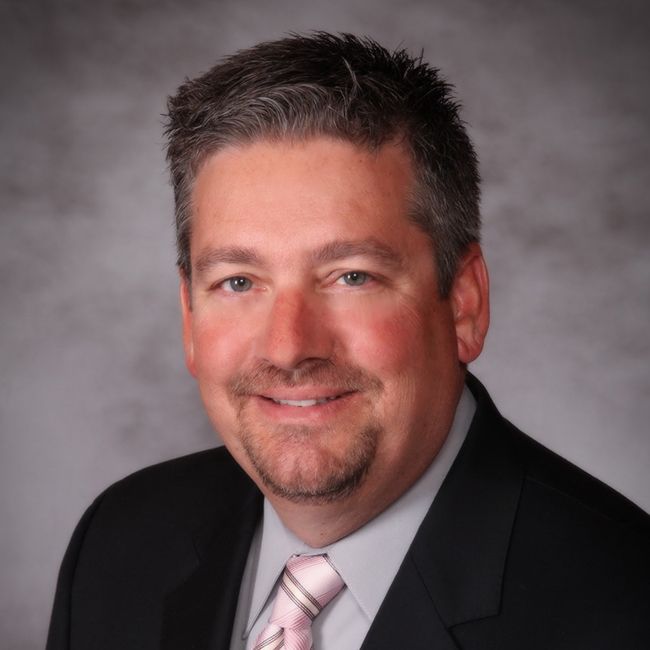
Good afternoon, everybody. My name is Dean Musser. I am the director of long-term strategy for energy services for Caterpillar. Prior to that, I spent my career in the energy tech space and in a concentration in demand response.
Steve Gupman (02:53):
Great. Thank you. So, let's get going. David, I'm going to start off with you with a question: when we look at today's operating environment and everything I talked about – that demand, the weather events, everything coming together – what part of the traditional utility model do you think is under the most strain?
David Ellis (03:09):
Thanks for that question. I'd be remiss if I did not acknowledge the monumental effort in helping customers to recover from Winter Storm Fern, but I'm not going to select storms. I would say the nexus, that intersection between process and real-time demand, is one of the biggest challenges today. The way demand is growing in a way that it hasn't in decades – maybe growing faster than it ever has before! It presents some very unique challenges to utilities in the way they plan, in the way they finance projects, infrastructure, etc. Utilities are used to implementing integrated resource plans, planning 10 years out, 20 years out. But you have large customers coming to them saying, "I need an in-service date in 24 months." And these facilities are just massive facilities. And so, I would say that presents the largest challenge to these utilities today.
Dean Musser (04:03):
Well, I think, David, to add on to that, you even see the power pools going from three-year forward auctions – which is not a long time compared to the 20-year IRP plants – but they're now going to prompt auctions because they just can't keep up with the accuracy of buying capacity for a forward market. So it's changing not just in the utility world, but it's changing in the power pool world as well, and time is not on our side.
Steve Gupman (04:27):
Where does the change need to come? Is the change coming in the process or is the change coming on the people side?
David Ellis (04:32):
If I were to prioritize those two, I'd say process first, because I believe utilities have as much talent and as much diversity in terms of professional capabilities of any company out there. But if you don't change the processes, then that talent will be utilized in the wrong way. They'll still be used in the same traditional way. They won't address our existing problems, the growth in demand. They'll continue to do things in a very rigid and very aged way. So without changing the processes, whether we had talent or not, we would still have the same problems. You need to address those processes and then, potentially, the people.
Steve Gupman (05:09):
Dean, I know you're an entrepreneur. I've worked with you. You're a leader; you've worked with people your whole career. Where do people fit into this?
Dean Musser (05:16):
It's going to be maybe hiring people with a different skillset than they have had in the past. Utilities are not known for hiring leading-edge, bleeding-edge technology people. That just didn't fit their business model, but that may be a “must have” going forward. And where they can't find those type of people, they're going to have to partner with folks that they probably historically have not partnered with in the past. I mean, look at Caterpillar collaborating with NVIDIA. Would you have thought several years ago that Caterpillar would be talking to a chip manufacturer and working directly with them? I don't think so! So I think times are changing quickly, and I think we have to change – [even the] skillsets of the people that we're hiring.
Steve Gupman (05:54):
Okay! Scott, so you mentioned innovation. What does innovation look like to an industry with that focus – where failures have real consequences and it impacts people's lives every day – what does that look like?
Scott Ungerer (06:06):
You need to think about risk management. You can't evaluate a risk or failure on an innovation program on the success or failure of a single project or technology. You have to view it as a portfolio. And then you have to draw lines of acceptance around that portfolio. And what do I mean by that? “Okay, we're not going to lose more than X number of dollars,” or, “We're not going to spend more than X number of dollars.” If you're successful, you can keep rolling that in. It becomes self-funding, and that gives the people encouragement to make winning bets instead of losing bets, and – not that they're encouraged to make losing bets! But the whole idea of what [level of] customer satisfaction are you willing to tolerate a reduction in – or what group of customers. And involve them in the process.
Dean Musser (06:53):
Yeah, Scott! I think that's a great point because utilities can innovate. And I think to Scott's point, the couple of us were [there] in the very beginning of that industry, and we didn't have it all figured out. And we learned through a couple years of trying to figure out how this was going to work. The rules changed significantly several times. But in the end, maybe in, I'd say, four or five years, we had a mature industry.
David Ellis (07:15):
I can think of another example where we had to innovate through the utility. I worked for Entergy, which operates in the Gulf South. And, you know, in the Gulf South, every now and then, they get the occasional storm coming up through the Gulf – these little hurricanes. And of course, hurricanes have a certain footprint, and they are deadly, but most of all, they knock a lot of power out. To me, innovation doesn't just have to be the device, it could be your approach toward something.
(07:42):
One innovative way that we address these frequent outages with some of our most consequential customers was we put a regulatory offering in place called Power Through, where we were able to put generator units on our customer's premise without them having to incur the capital cost of having done that. They would simply pay us for O&M, but they had the backup power that they needed, that they may not have otherwise been able to afford.
Steve Gupman (08:09):
I hear you! I like distributed generation. I think about distributed generation every day as a [Cat] Electric Power employee. Obviously distributed generation is part of the answer, but what do we need to do differently? Because we need to do something different to prepare us for the future.
Scott Ungerer (08:23):
I think I've been probably encouraged to say this. My personal opinion is that DERs are a big answer that's been, quite frankly, untapped. And why is that? The people still view DER as a customer premise problem that needs to be dealt with and handled and resolved, but they don't view it as a grid asset. I'm now completely flipped. I'm a huge believer that distributed generation – DER resources of all sorts – actually can be grid assets.
(08:54):
But what's really standing in the way? The regulatory model. And I say the regulatory model not because they don't encourage it. They don't make the economics (in my view) fair across the participants, and [in] who has control when, those types of things.
(09:07):
So the technology, I'll tell you, is there. The technology to be able to do it is there. But the economic model – the business model, which all rests inside the regulatory process, is not there.
Dean Musser (09:20):
Well, I think, Scott, one of the issues we have as a mindset issue is we tend to look from an interconnect perspective – things of that nature, we tend to look at distributed generation as a problem instead of a solution. We have an example where we had a small natural gas unit that we were putting in a [municipality (muni)] in New England, and we went a year and a half through an interconnect process, through a lot of system studies for this engine. And quite honestly, we didn't need it for the size engine we had, but we had to comply with everything. And we had the utility operations folks saying, "We need this asset because it's an express line that feeds from the substation to this muni, and it's already becoming overloaded. So we would love to have access to that asset." Fast forward, we got that done and we run that. Caterpillar dispatches that unit for or on behalf of the muni, so it helped the situation for the utility.
(10:16):
So there can be win-wins out there, but some of it's an education process. And when we look at the queue and we see that – like in PJM's queue, it's 900-some days to be in the PJM queue – and we're talking about everything from one-megawatt units to a thousand-megawatt units of gas plants; that's got to change. Because some of these are quick fixes, and I think distributed generation is one of those quick fixes.
Steve Gupman (10:42):
Right. So you talked about the distributed generation…Scott, you mentioned the regulatory aspect of that, and I wanted to bring a current event into this. The Department of Energy issued emergency orders that allowed PGM, ERCOT, and Duke Energy…Basically, it was a letter saying that those entities were allowed to call backup generation from data centers to support the grid if the grid is about to collapse, right? There's a lot of confusion about that. There's an order, right? But what happens with that order or how to actually execute it was maybe in question. How do you think something like that – the DOE getting involved, the DOE issuing an order like that – how does that change a dynamic moving forward?
David Ellis (11:20):
I'll start. The one thing that I think is a bit of a misnomer is most people don't realize that a lot of utilities have customers on interruptible rates. They know that they can disrupt certain customers, and there's some benefit to doing that. So when calls like this happen they're able to call on these very large customers (customers who actually benefit from reduced rates because they've agreed to be flexible), and those customers will reduce that load. Coordinating this across a very large area is a different story altogether. They don't reduce those loads frequently enough. The technology may not be in place to coordinate it with precision, the way this call was made. And so that's where I think the deficit potentially lies.
Dean Musser (12:12):
Yeah, and I think David's right. We could have done this the old-school DER way, but we're talking about loads that we've never seen before behind the meter. And so I'm not sure how you bang a one-gigawatt load on and off the grid and still maintain grid stability. There has to be a way to – we're going to soft load that to the grid and off the grid. The issue there becomes: most of those systems are not set up for it. So to get an order on a Friday or Monday (whatever day we got it), and then the next day at 9:00 AM, you had to list all the units that you were going to put into the market – was literally impossible, and nobody had it all figured out yet.
(12:49):
I think we need time to digest that this is going to happen again. How do we do this? What are the economics for the end-use customer? How is the utility going to be involved versus the power pool going to be involved, the retail energy providers? Because it's everybody. It's something that is going to happen more often than not. We spent a lot of time last week racing around trying to figure out how to help our data center customers, but now we're going to have to really think about if this is going to be the model going forward, we got a lot of work to do.
Steve Gupman (13:17):
Scott, you're in venture capital, right? So you focus on technology. What technology do you think we need to bring to bear on this problem?
Scott Ungerer (13:25):
There's a lot of data that goes on in the utility industry. Humans can't process that information quick enough to be able to make it effective. [Artificial Intelligence (A.I.)] can. And it takes a lot of work in getting the dataset set up, getting the right algorithms trained, correlating the right pieces of data. But as the world's progressing (in the world of A.I.), A.I. is going to tell you what data it needs to be better, and it'll even point you in that direction.
(13:51):
But what's the issue in the utility industry? One of them is the way the tech companies want to charge for that software with A.I. is an expense to you all that you don't make a penny off of. So that's why I continuously look back to…I have to say, the regulatory model because it's how the economics of the industry work, but it's really the business model. More success comes out of the investments that we make around improvements in the business model themselves as compared to technology. Technology's just the starting point. It's the “table stakes,” as they used to say. But software is the answer and we need to find a way for tech companies to sell it in a way that utilities can be supported in buying it by the regulator.
David Ellis (14:37):
Yeah. I'll identify two additional areas. The first I'll identify is sensors. You have to have accurate devices in the field that feed the A.I. systems and the software systems (and other underlying systems). And without that accuracy – if you have devices that have been sitting out there and aren't functioning anymore, where there's float in the readings – the data that makes its way to the A.I. systems will be inaccurate, and the result will be something that we don't want to see.
(15:06):
And then the other thing that I'll just mention is, as a reformed chief customer officer, [I say] you have to prepare customers, these businesses for what's coming. If this stuff is going to happen over and over again, it's going to be disruptive to businesses, and they need to be able to plan around it. They can, but they need to be prepared for it.
Dean Musser (15:23):
Yeah, and I think both of you are correct, and I think the plug-and-play aspect of this is really important. Utilities can't buy from one source their entire system, so they're going to have multiple different software assets out there, multiple different sensors, and that all has to plug and play at some point. And that's where the software comes in, to make sure that it can take individual units from individual manufacturers (whatever it might be) and pull all that into a data set that one centralized software can take a look at and then basically manage. So that's something that – the plug-and-play aspect, which we've been trying to get to since 2000, we're still not there yet.
Steve Gupman (16:00):
Dean, this industry has a low risk tolerance, right? And change can drive disruption, it can increase risk. So how do we embed this technology and this innovation into that industry? How can we help a utility to gain the trust that they can rely on a software like that?
Dean Musser (16:15):
First, I think we have to change how we're branded. I think the utilities are on a similar journey that Caterpillar is on. Caterpillar is recognized as a manufacturing company, big machines. Utilities are recognized as power providers, or delivering of the power. But in reality, we're tech companies. And I think to attract the right talent, we're going to have to change how we look at ourselves, because there's no way that we're going to solve the magnitude of the problems we have today without technology.
(16:48):
I think rebranding ourselves and making us look at things differently than what we looked at in the past with the old-school processes and what we've done in the past. It's been very successful, but we're going to have to embrace technology. And I think first we’ve got to think of ourselves as technology companies.
Steve Gupman (17:03):
Scott, do you have a perspective and ...
Scott Ungerer (17:05):
Oh boy, do I have one! I can't tell you how much I've learned about pilots and why we discourage our portfolio companies to pursue them. [A] pilot should be a demonstration. It should involve as many utilities as [who] wants to participate. But the host has a premier seat. The host tech company has a premier seat. They map out the basic program. But then you could have one or more layers of people that contribute towards the demonstration. Hey, you may want to see these five variables proven out as being addressed properly, but the other people sitting around you may have another five variables that they want to see out of the same demonstration.
(17:45):
So now all of a sudden you're looking at 10 [variables]. Yes, it's going to take longer; it's going to cost some more money. But the result is the reports that you all would need that are involved in pilots and demonstrations to justify expanding them or going forward. And the tech company can use it as a sales tool, so they don't have to conduct as many of these going forward. Because the prospective customers have verifications along the way by trusted parties.
Dean Musser (18:11):
And I think that model does work. And this is one of the reasons why I'm a big believer in energy tech through venture capital, because you do get to...It's not a single pilot for a single utility, it's something that works across a group of utilities, and they get to see firsthand how it worked. And it just speeds the adoption. I think that model was very important today.
Steve Gupman (18:32):
We're talking a lot about what's happening, what we need to do to change in the next 5 to 10 years, but I'm wondering, if we had this panel 10 years ago, would we be saying the same things? And we're just in an endless Groundhog Day situation, or what were we talking about 10 years ago?
David Ellis (18:46):
Well, 10 years ago, we were looking at some of the same problems. Some of the differences are: demand is growing – it's not flat (or declining, as it was maybe 10 years ago); the storms are more intense and they coming more frequently now and lasting longer, which is a problem; and the new loads that are coming on are coming on at different size, and they're demanding. They want to be in service a lot faster.
(19:11):
This takes me back to the answer I gave early on, which is: there's a time mismatch. The processes that we have in place need to align better with the demand. They need to meet at the speed of the market, move at the speed of the market. And we're not there yet.
Scott Ungerer (19:26):
I can't necessarily calibrate my memory accurately, but it feels like 10 years ago we were asking – the customers were asking, "We need the data! We need the data! We need to understand this, that, and the other thing." So we spent a lot of time getting them the data. Then they said, "Well, thanks for that! What's it mean?" (laughs). And then the problem keeps trickling downhill. So, we're still in the same cycle, we're just at a different place in it. We haven't closed the loop all the way yet. When we have the data that goes all the way to a verified solution that solves the problem, then we've closed the loop, and that's where we want to get to. And that's a systems approach.
Dean Musser (20:09):
I think Scott's right. It was all about the data. I'll go back maybe 15 years ago. People used to ask me, “What keeps you up at night?” Well, what kept me up at night was getting the data. We would have holes in the data. I mean, we had rooms this size with modem banks and servers firing off to just to get the data. Not use the data, just get the data! And then when data had holes in it, what were you going to do? That's all gone away. So getting the data now is not the issue. To Scott's point is, what do we do with the data?
Steve Gupman (20:39):
Are the utilities thinking differently now, or is it still just the problem has changed a bit, things are accelerating, but it's still the same attitude?
Dean Musser (20:46):
No. There's been a lot of change in utility thought from our perspective in the last couple years. If you look back, let's say three or four years ago, we were talking to many utilities about microgrids. But because of the regulatory environment, the customer advocacy, the politics that were around, everything had to be solar and storage. And the minute we said, "Well, we really want to back it with a natural gas engine, whatever it might be, and we'll put the solar and storage around it.” [The response was,] “No way! It's not going to happen. We can't have any fossil on our facility." That's changed. The problem now is so immense, there's no way that we're going to cover this with just one source of power.
(21:26):
And I think one of the things that we've been missing – that I think the utilities are now starting to really embrace – is we've got to have a balanced approach because we cannot solve this with just one type of power. And I think some of those same utilities have reached back out to us and said, "All right, I need a microgrid. I need it four times larger than what we were talking about a couple years ago, and now it can be backed with natural gas in the evenings or in the night, but we want solar and storage during the day." Okay, that's a balanced approach! So I think things have changed.
Steve Gupman (21:57):
So last question…and I'll go through each of you on this one. If you've got one chance to talk to the leadership in utilities and municipalities, even in large loads, what's the one thing that you think they need to take away, the one thing they need to change, moving forward to prepare us for 2035? Dean, you seem like you want to…
Dean Musser (22:14):
Well, I think we have to sell to the next generation in the talent pool. Utilities need the brightest people to solve this generational problem. And we’ve got to take a page out of the renewable power [guys’ book, who] were around 10, 15 years ago. They were cool! I mean, people wanted to go to work out of college to a renewable energy provider because that was a cool thing to do. We need to do that same thing. We need to be saying, "Hey, look, come to the utility. We're solving a generational problem for society," and hopefully that'll be cool enough to attract the talent that we're going to need to solve this problem.
Scott Ungerer (22:51):
Well, I think I'm probably going to have to go back to my favorite topic, which is the regulatory framework. I can't get off it, because the reality is the regulatory framework is supposed to be the proxy for the marketplace. The regulatory framework that's been in place is outdated, in my opinion. And secondly, technology is moving fast and it's not being necessarily driven by the needs of the power industry. So how do we apply it? And how we apply it is: in a way that needs to make economic sense for all parties involved. But people need to feel that they're treated fairly economically and respected. That needs to be woven, in and I don't know that it is properly.
David Ellis (23:35):
And I agree with both Dean and Scott, and I think what it boils down to is stakeholder alignment. The market is moving too fast, it's growing too fast, and customers aren't going to wait. They're going to move forward without us, unless we're aligned and we work together to collectively resolve these problems.
Outro (23:55):
Thanks for tuning in to the Power Bytes podcast. If you enjoyed the show, head on over to cat.com and check out Electric Power for more exciting content. Let's power tomorrow together.

 North America – English