

Read the full episode transcript
Intro (00:00):
Welcome to the Power Bytes Podcast, brought to you by Caterpillar Electric Power with your host John Thomas. Each month, we deliver the latest insights, trends, and cutting-edge tools to keep you ahead in the dynamic energy industry. Whether you're streamlining operations, embracing new technologies, or staying informed, Power Bytes is your go-to source. Join us as we explore innovations shaping the future and the resources you need to succeed. Welcome to Power Bytes, where energy meets innovation.
John Thomas (00:31):
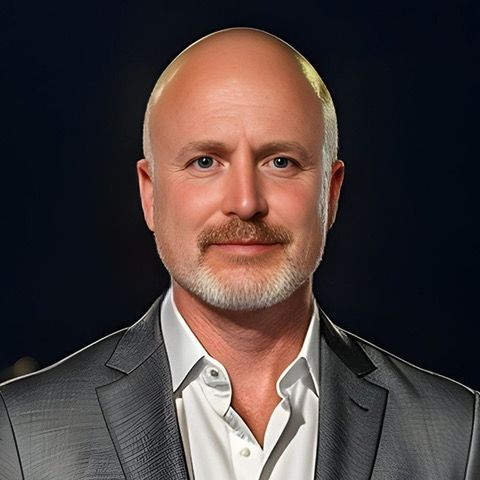
Welcome again to another episode of Power Bytes. This time on Power Bytes, we're going to be talking about customers who depend on generator uptime, and they're trying to not be stuck by making a costly decision at the worst possible moment.
John Thomas (00:43):
We're going to dig into why rebuild decisions matter long before the failure happens; how that timing plays into cost, reliability, and downtime; and what all of that really means to your operations or customers’ operations.
John Thomas (00:57):
And if you're not familiar with what the term “rebuild” is, we're going to get into that as well. By the end of this conversation, you should have a better sense of whether rebuilding, replacing, or planning ahead is the right move for you.
John Thomas (01:10):
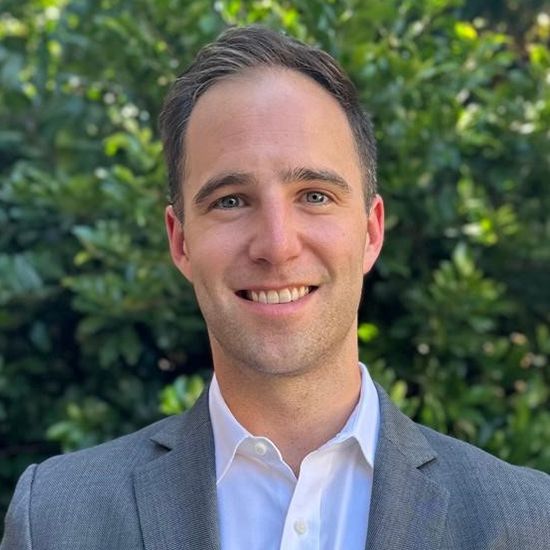
And I am happy to introduce Andrew Farr, who has joined us today as one of my Caterpillar compatriots. Andrew, before we get into today's topic, you want to give a quick introduction and a little bit about your background and your experience?
Andrew Farr (01:23):
Oh, absolutely! Thanks for having me, and [I’m] excited to be here. I've been with Caterpillar for a little over a decade now. I started my career on the shop floor in our factories – so think: manufacturing, operations, procurement – really understanding how the product gets built and where things can go right or wrong.
Andrew Farr (01:43):
But the bulk of my career has actually been in (what we call) the lifecycle management side, focusing on delivering customer outcomes over the life of the asset. I started in mining, where you learn very quickly that uptime and total cost of ownership [are] not theoretical, they're real daily pressures for customers. I moved into electric power around three and a half years ago, and what I found really interesting is that similar fundamentals are applied in the electric power spaces [as we use] in the mining side, and we even see where the stakes are even getting even higher today in the electric power space.
Andrew Farr (02:18):
Today I lead our aftermarket lifecycle efforts globally, helping customers think through how to operate these assets reliably over the long term, not just how to fix them when something goes wrong. At the end of the day, my job isn't to sell parts or to help customers fix the equipment; it's to help them make the best lifecycle decisions for their operation.
John Thomas (02:42):
I like what you said there, thinking about mining…For any of you that might be familiar with the mining industry…Talk about a miner who's running a gold mine. They might be running 24/7 operations, so even an hour of downtime can cost them a lot of money.
John Thomas (02:56):
And then similar[ly], as you transition that over to electric power, if a customer is depending on that genset to run and provide power and it doesn't run, minutes can cost that customer. Why don't you describe a little bit for us, Andrew…When we talk about “rebuild” in the power industry, what primarily are we talking about?
Andrew Farr (03:15):
[There are] many lifecycle interventions that happen over the life of an asset, John. And we have a very broad product range from small to large gensets and engines. Predominantly what we're talking about is the major overhaul interval that happens at the end of life. For our small engines, outside of preventative maintenance, it is that major overhaul that you're talking about, that major rebuild decision of: do I buy a new genset or do I have a second life?
Andrew Farr (03:49):
And on the large side, there are many more lifecycle interventions. Those who are familiar with operating this would hear things like top-ends, in-frames, major overhauls. There's a little bit more (because the lifecycle is longer on our large gensets) than just your standard preventive maintenance. We still really like to hone in (when we say “rebuilds”) on that major overhaul, because that's probably the biggest decision for a customer from a financial impact decision. And [we like] taking a step back and looking at their overall operation and, “Where are we going over the next five, ten, maybe even 20 years for some of our gas units?” That's really [what] we're focused on: helping customers make that call.
John Thomas (04:27):
And to help me and the listeners understand a little bit better, when you say a major overhaul, what are we talking about? Are we getting all the way down to the engine block is stripped down…? I mean, what level are we talking about when you say “major overhaul”?
Andrew Farr (04:41):
Correct. This is not something that's happening in the field. This is not a field repair. This is going back into a shop, your dealership, and it is really being stripped down all the way. Main bearings. I mean, we are really rebuilding it back up. You're taking inspections of the block to make sure things are back in tolerance. We like to say that our goal is to give you a full second life on that engine and generator set, and so to accomplish that, you really need to take it back down to the fundamentals and the basics and build it back up so that we are confident that you're going to get that reliability over its second lifecycle.
John Thomas (05:19):
Wow. Okay. So you're talking about going all the way down to the engine block, probably sandblasting it, repainting it, maybe honing the cylinders. I mean, you're talking about that level of major overhaul?
Andrew Farr (05:30):
Correct. You might be doing re-machining, block finishing, crankshaft intervention – a lot of new and Reman parts we focus on. You're really taking it back down to the basics and building it back up. And [we’re] really focused on that.
John Thomas (05:44):
Well, that's interesting. You think [for example]…maybe of your car, you think of maybe just an engine replacement, right? You're trying to get like a second life out of a vehicle. But this is taking it out of service and taking it all the way down to that. On a couple instances there, you've said “second life.” When you use that term…I think it makes sense. You're taking it out of its “first life.” You're doing that major overhaul and getting into the “second life.” Is the second life something that just extends the inevitable “death” or failure of this product? How many additional operating hours can a customer get out of a second life compared to an average first life?
Andrew Farr (06:24):
This is one of those huge…it depends on the application. But I'll give you some of my experience in general. There's definitely a perception that rebuilds are just buying time. Right? But really when they're done correctly, that's not the case. A properly scoped rebuild can absolutely deliver a full second life. As we talked about, you’re restoring critical components, you're addressing some known issues, and you're resetting what I like to think of as that “reliability curve” of your asset. We try to align that scope of the rebuild to what the customer is trying to achieve. And let me just give you an example. We have a very large industrial customer in the Asia-Pacific region, and they run large gas gensets to power their operations.
Andrew Farr (07:16):
For them, these assets are highly critical. They plan and execute full major overhauls (as we talked about) to achieve a true second life. And we worked with a customer to introduce upgrade kits that they can utilize to enhance their efficiency at the time of a major overhaul. So you're not just restoring the asset, you're also improving performance for that next lifecycle.
Andrew Farr (07:45):
John, on the other end of the spectrum, in our smaller genset size, we've actually offered multiple tiers of rebuilds as well. At the top end, you have your full second life (a major overhaul), but we've also looked at just that targeted life extension. If a customer is coming in and saying, “I only need 5,000 or 10,000 more hours after this,” we've come up with rebuild kits that could help get you towards that life extension. We're not just trying a one-size-fits-all here. We're trying to listen to what the customer might have and need for their operations, and it comes back down to what their business need is – whether you're resetting the asset for the long term or just extending its life in a more cost-effective way.
John Thomas (08:30):
Yeah, that is super interesting because I didn't really think about it that way. I would have assumed it was always to get that second life, but that's a great point that the customer has a defined extension of operational time that they need [and] that we can help them work with that as well. That's interesting! Okay, Andrew. We've got that understanding of rebuild and of major overhaul and second life. I would guess that for a lot of customers there's this question of is that major overhaul worth it compared to selling that used asset and just getting into a new genset? Can you step us through (maybe an example) of how you guys have had a conversation with a customer to help them make that decision?
Andrew Farr (09:16):
Yeah, absolutely! Rebuilds aren't necessarily a topic of discussion that comes up all of the time with a customer, right? This is all part of a broader lifecycle conversation around how the customer plans to run their business. And so what we're really talking about is: how long do you want to run this asset, what level of reliability do you need, and how do you manage your costs over time? A rebuild becomes one of the key options when a customer is looking to extend the life of an asset. And when it's done right, it's really not just maintenance. Like I said, it can give you that full second life with predictable performance. It's not a repair decision; it's really a business decision around total cost of ownership (TCO), reliability, and that long-term asset value. I think you could see this play out in many different ways of how a customer would choose to approach this.
Andrew Farr (10:19):
We have several customers in the North American landfill gas space who plan extremely well. They map their rebuilds years in advance with their dealer, and they even look at different repair options. And we can talk about this more later – around repair options that can be utilized to minimize their downtime. For them, it's a very controlled event. You try to limit your disruption, [get a] predictable cost, and keep your operation running smoothly. Where you see maybe the decision flip to the other side is someone who's not proactively looking at the maintenance of their asset. You're waiting a little too long. You make a decision too late in the lifecycle. Some additional damage or failure might have occurred.
Andrew Farr (11:05):
Now you're talking about a more costly rebuild. And when you talked about the economics in the decision of rebuild versus replace (sell and replace), it's all – in my mind – around that “percent of new.” The longer you push it (and you might, the less you maintain it), failure rate, the more that rebuild might creep up on that cost of new. And you might say, the right decision here from a financial impact might be to jump to the newest technology – buy new. But going back to that “replace versus buy new,” it goes back to: what problem are you trying to solve? I can keep diving into this, but let me know if I'm on track here.
John Thomas (11:45):
You're absolutely on track. It's making sense to me. The comments about “you can wait until it's too long.” I used to do rebuilds on some of my engines on cars when I was younger, and if you waited too long you'd have more work to do. As an example, you might have more damage to the cylinder wall in the block, and you'd have to – instead of just be able to hone that cylinder, you might have to sleeve that cylinder. Right? You're taking this risk of more damage if you don't have the discussion early enough and aren't doing a good job with your preventive maintenance. Let's think about some of those examples and thinking about how someone could wait too long, or if they're trying to balance that decision, that “business decision” (as you framed it) of rebuild versus replacement. When you think about the folks that have gone through that process, what is something that customers often overlook when they're comparing those options?
Andrew Farr (12:37):
I would say downtime is one of the biggest factors in these decisions. And we don't always model it. We would always think about downtime in that cost of your business. In today's applications, the most of our customers are using this at – especially mission critical ones. Downtime is not just an inconvenience. It's really lost production. It's lost revenue. And sometimes it can even be a contractual risk, depending on what they're using that power for. Where we see that biggest difference around planned versus unplanned…When a rebuild is being planned, both Caterpillar and the Cat dealer can really align their resources, secure parts, [and] execute in a defined timeline. When it's unplanned, it's reactive – and it almost always leads to longer downtime and higher costs.
John Thomas (13:27):
You've mentioned downtime, and it got me thinking. Certainly, if it's unplanned downtime, that's one thing. To your point: they've got to be reactionary. But if it's planned downtime…As you mentioned earlier in our conversation, about the fact that this isn't a “field executable” kind of repair, this is something where we're going to pull that asset off of the customer site and take it back to the local dealer, where they're going to do this major overhaul. What are some of the things that you've seen our customers do to maintain their operations, even during that planned downtime, where we're taking that asset back to the dealership for the major overhaul? What are some of the options that you've seen customers execute to backfill that genset as it's been pulled off of their facilities?
Andrew Farr (14:07):
I'll give you a few examples of how you can manage that, but then also how we look to limit it sometimes. And so there are several options if you're planning it out. Rental power is an example, right? If you cannot have and if you don't have any redundancy in your operation and really, truly need it to keep running at the capacity and megawattage that you do today, you can always bring in a rental asset to help keep power going. That can be expensive, right? When I think about where I look to limit the impact for the customer (and I brought this up earlier)…which is around our repair options. One of the aspects that we like to look at is, how can we limit that impact for the customer. How can we limit that downtime as much as possible? You have your standard dealer rebuild that we've been talking about, which is stripping down the genset, building it back up. That can take a while. Even when you plan really well, that can take weeks.
Andrew Farr (15:07):
What we've looked to do is [ask ourselves], “What are some repair options that we can offer as Caterpillar to limit this?” You might hear the term “short block” used in industry a good amount or even a “full complete engine.” We utilize our Reman business here within Caterpillar to provide some of these options. I'll give you a clear example of where we've seen this happen with one of our customers in the Asia-Pacific region who utilized our gas 3520 gensets. They had standardized on using Reman short blocks for their major overhauls, and as a result they found that they reduced their overhaul time by 50% and sometimes up to 75% by using a short block when compared to a dealer rebuild. Now, that translates directly into days or even weeks of additional operating time for their business. Talk about if you had to put the rental power on – that's significantly less cost, additional cost to your business. And so that is far more valuable than the cost difference in some of the price additions of our short block or complete engine offerings. The point is: planning ahead. You have that opportunity to control your costs and really buy back uptime.
John Thomas (16:25):
Yeah! What I think you're highlighting (in my mind) is [that] you need to have a really open conversation. Because I think a lot of times, as a consumer (or a customer or whatever)…but as a consumer, personally, we don't know the right questions to ask because we don't know what's possible. I hadn't thought about that, about the fact [of] instead of doing that major overhaul, you could just do an engine replacement with the Reman engine to limit that downtime. What are some of the things that you see people regularly say to you about why they think that a rebuild is probably not the right [solution] for them?
Andrew Farr (16:59):
That's a good question! I think you're getting back to…It comes back to the business operation. One of the things could be, “Hey, we're hitting the end of what we're trying to do with power.” Right? The customer might be winding down operations at a certain site. Other business decisions might be happening that [have them] saying, “We no longer need this power – or need this asset to make power and put it on the grid.” Right? That's a clean and easy way to say, “I am not going to drop thousands of dollars into a second life. My business economics are changing.” So that's the clear answer of something major is changing.
Andrew Farr (17:37):
The really big one comes down to…I'd say the failure aspect. When you get to the point where we weren't planning this and there's a sudden failure, and that price point of the quote and the lead time of the quote for rebuild really starts to creep up closer and closer to a price of new – you're going to stop and probably say, “Is this the right time for me to move to the newer technology, the newer platform? Because the price of new versus rebuild just isn't as compelling.” It comes back down to the same business decisions. It's your total cost of ownership. If we can't deliver a rebuild that's a compelling offer of new…And a lot of times, on our smaller size, that could happen when you push it to failure. It's not maintained correctly, is another example. That's where we see customers making that decision.
Andrew Farr (18:27):
There could just be, in your industry, a very high residual value for these gensets. You could say between the residual value and that price to rebuild it, I'm just not financially seeing that this makes sense. Maybe you have stock available, so the lead time isn't as big of an issue. But a counter to our argument of why we think rebuilds are a really good lifecycle decision: it can also be…if those aren't being met (the price point of new the lead time to execute it)…If those aren't there, that's why you would think to replace it with a new. Or there could be regulation change in your region. There could be different emissions standards. The landscape changes globally, a lot, and you might have to switch to a new technology, a new genset, to really meet those.
John Thomas (19:14):
Yeah. When you said that earlier about new technologies, that's what my head jumped to: whether it's emissions, whether it's fuel efficiency or fuel capability, it's those things, right? If you know, hey, I can go through this rebuild cycle, but it's still might not deliver either on that new regulatory need or on my internal goals to hit some fuel efficiency target or some emissions target or whatever that would be...then maybe I would need to look at the technology. What I'd like you to think about (and see if you can share with the audience) is maybe a couple examples if you can – and protect the innocent or guilty, or however you want to phrase that…But maybe [give us] a couple examples of some rebuilds that you know of that went really well and really delivered or over-delivered what the customer expected. And then the flip side of that coin: what are some that didn't go so well, and what were the reasons for that? If you could share those customer stories with us, if you would.
Andrew Farr (20:08):
Yeah, I touched on several examples of ones that went well. And I'll just reiterate it: when you are having the discussion proactively with your dealership around planning, understanding your business, understanding how you've maintained it, kept the quality up of the maintenance on your product. When you have had those planning discussions with your dealer for plan overall…And I have countless examples of customers who are executing this day in, day out. I talked about the North American landfill gas market segment and customers who are really good at planning and executing major overhauls there.
Andrew Farr (20:44):
Another one would be your utility space. We have customers in North America as well who have critical utility application for their large gensets. And they are very good (mainly due to the remoteness of where these assets are) at planning almost a year or more in advance, because downtime or failure would mean power failing for an entire community. In certain areas, that's just unacceptable because that means no heating for your house. That's where we really see customers take advantage and [things] go well with this, is when you plan it out in advance and Caterpillar is working with you to execute this. John, I have several examples of this not going well. First is on maintenance, standard maintenance. Your standard maintenance and the repairs that we recommend throughout the lifecycle of a genset can be costly. Right?
Andrew Farr (21:36):
It's expensive to maintain these units. And where I would give you an example of things not going well is: cutting the corner on maintenance, not following the OMM, maybe trying to save some money by not using as high of a quality oil or filtration, and ultimately…giving an example of a time then where in a critical application, a unit actually then fails because it wasn't being maintained properly. That just brings in a really costly decision of you're bringing in rental power. You're now trying to figure out how do we get maybe some highly constrained components rush shipped to rebuild this, or getting a long lead time or lead time on a new replacement? There's several examples where [not] maintaining it can lead to a really costly, failed outage for many customers.
John Thomas (22:31):
Those were great examples. For our listeners who were asking themselves these questions about, “How can I plan, and how can I minimize the impact or the cost of rebuild as you go into a second life?” I'd summarize what you said as: be proactive versus reactive, because reactive is going to cost you more money! And second, make that investment in proper maintenance of your assets, because that will pay off in the long run, not just in its first life, but potentially in its second life – if that's the path that you want to take.
Andrew Farr (23:03):
“Planning gives you control, and the failure to do that takes that control away,” is the way I like to think about it. When you plan, you're controlling the timing, you're controlling the cost, you're controlling the scope of the work. We can align resources, secure parts, and minimize that impact. When you run to failure, you lose that control. Decisions get made under pressure. Downtime is typically longer now, and costs are almost always higher for the end customer.
John Thomas (23:32):
That makes sense. I love that: planning equals control. [One of the other things that you said is] a customer really needs to come to grips with: what is their business need for this power asset. If we were talking to a customer today and they were getting ready to have a conversation (either with us or with Caterpillar or with the local dealer about rebuild options), it seems to me like that's an important element, that ahead of time they need to be understanding [of] what is their long-term business need. If somebody was to reach out to you and say, “We want to have this conversation,” and you were going to give them that guidance, make sure you have a good understanding of your business need. And they said, “Well, what exactly do you mean by ‘business need’?” How would you clarify that for them so they could go back and make sure they had all of that listed out and they were ready to have that conversation?
Andrew Farr (24:31):
I try to simplify down to three things. When you're facing [it] and trying to decide that decision around rebuild, I simplify it down to three areas, which is: the condition of the asset, application criticality, and operating horizon. We've talked about the asset condition. “What shape is this equipment really in?” Making sure you're getting those inspections, the maintenance history, understanding any developing issues that you've had comes into play. You need a clear view of whether you're restoring a healthy asset or recovering a damaged one. Second, application criticality is that second factor I'd like you to come in understanding, which is: “How important is that asset to your operation?” If downtime has a major impact on production, revenue, or contractual commitments, that's going to be controlled decision-making.
Andrew Farr (25:22):
And the third one, John, which is what you were just talking about, is that operating horizon. How long do you plan to run this? If you need an asset for another five, ten, 20 years, that may justify a full rebuild or even a replacement, as well. If it's a shorter horizon, that's where we could have those targeted discussions around lifecycle extension, different approaches that might make more sense. When you have clarity on those three and sit down and talk with your dealer around the rebuild versus replace decision, it becomes much more straightforward.
John Thomas (25:56):
Well, that is a great summary and probably a great place for us to end today's conversation. Andrew, I'm hoping that any of our listeners that are maybe listening to this episode because they are having to face that decision of rebuild or replace…I'm hoping that some of this was beneficial for them. But I love [that] you had a great ability to summarize some of those points for our listeners. First off, I just want to say thank you so much for your time, for not only educating our listeners, but educating me, because my exposure to this part of our business is pretty small. Thank you for taking the time and spending time with us. And then to our listeners, once again, hey, thanks for listening and we hope you hear us again soon.
Outro (26:39):
Thanks for tuning in to the Power Bytes Podcast. If you enjoyed the show, head on over to cat.com and check out Electric Power for more exciting content. Let's power tomorrow together!
 North America – English