
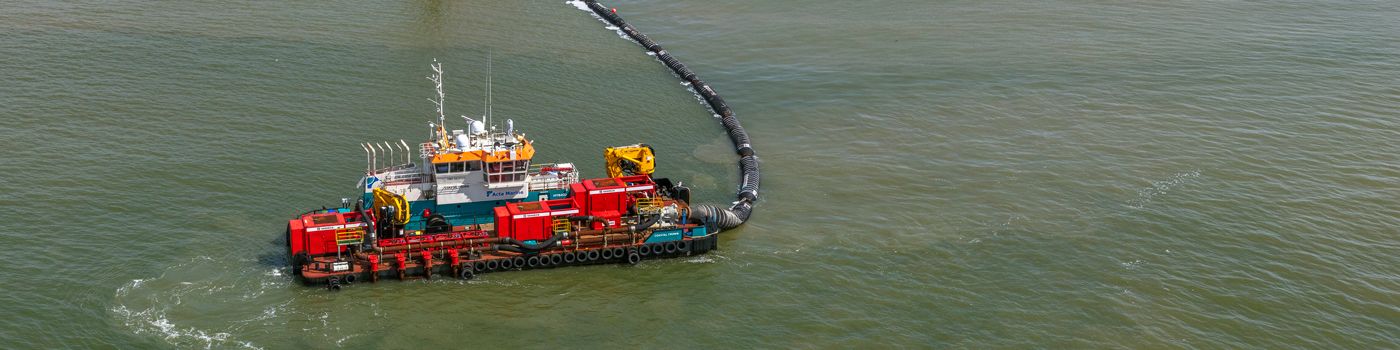
High Pressure Performance
In Van Heck’s world, stopping is not an option.
The Dutch water management specialist operates in some of the toughest environments imaginable, from offshore wind installations and dredging operations to emergency flooding and large-scale marine construction. In these settings, there is no margin for error.
“We know we’re a cog in the gearbox,” says CEO and owner Herman van Dijk. “But we never want to be the weakest link.”
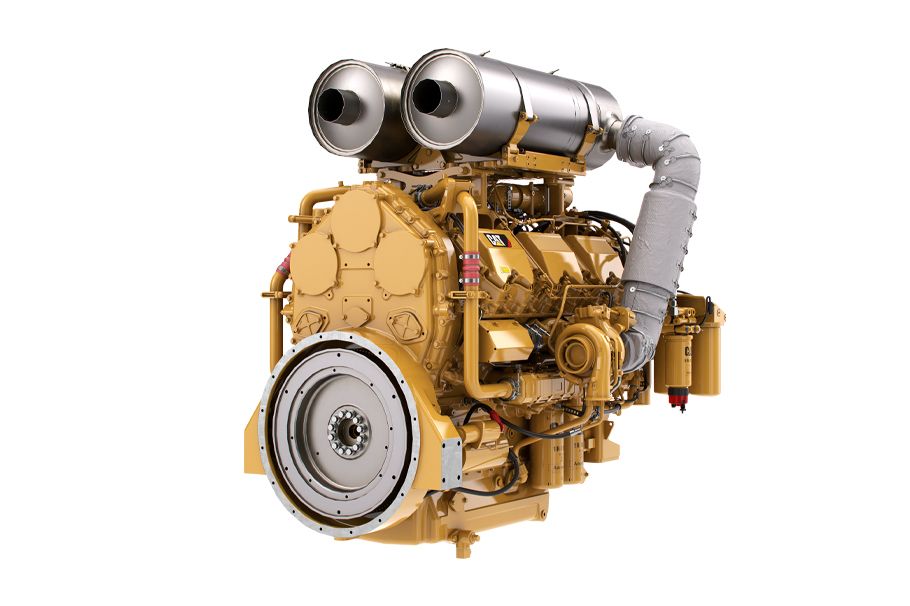
That mindset defines everything Van Heck builds, and why every diesel-driven pump in its fleet is powered by Cat® engines.
When the job cannot stop
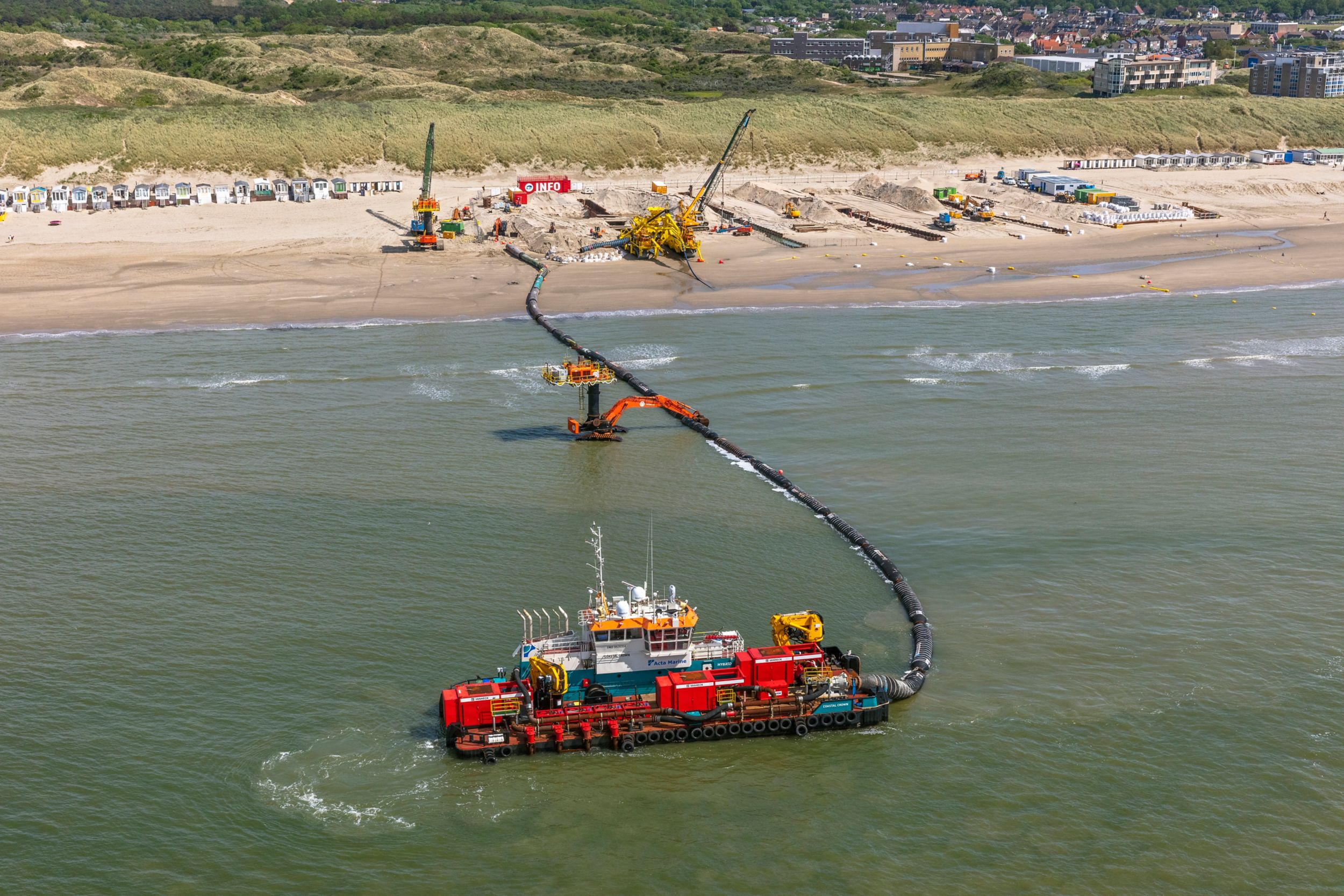
Van Heck’s systems are often deployed alongside vessels costing up to a million euros per week to operate. If pumping capacity fails during offshore cable burial or dredging, the financial impact is immediate.
In offshore wind projects, high-pressure water is used to liquefy the seabed so cables can be buried five metres deep. If the pump spread stops, the operator may have to cut and recover the cable, repair it and restart the process.
“That’s something we cannot afford to cause,” van Dijk explains. “We work in the middle of the ocean or in the middle of the desert. We don’t have the luxury of pulling over and changing a spare tyre. That ship just cannot stop.”
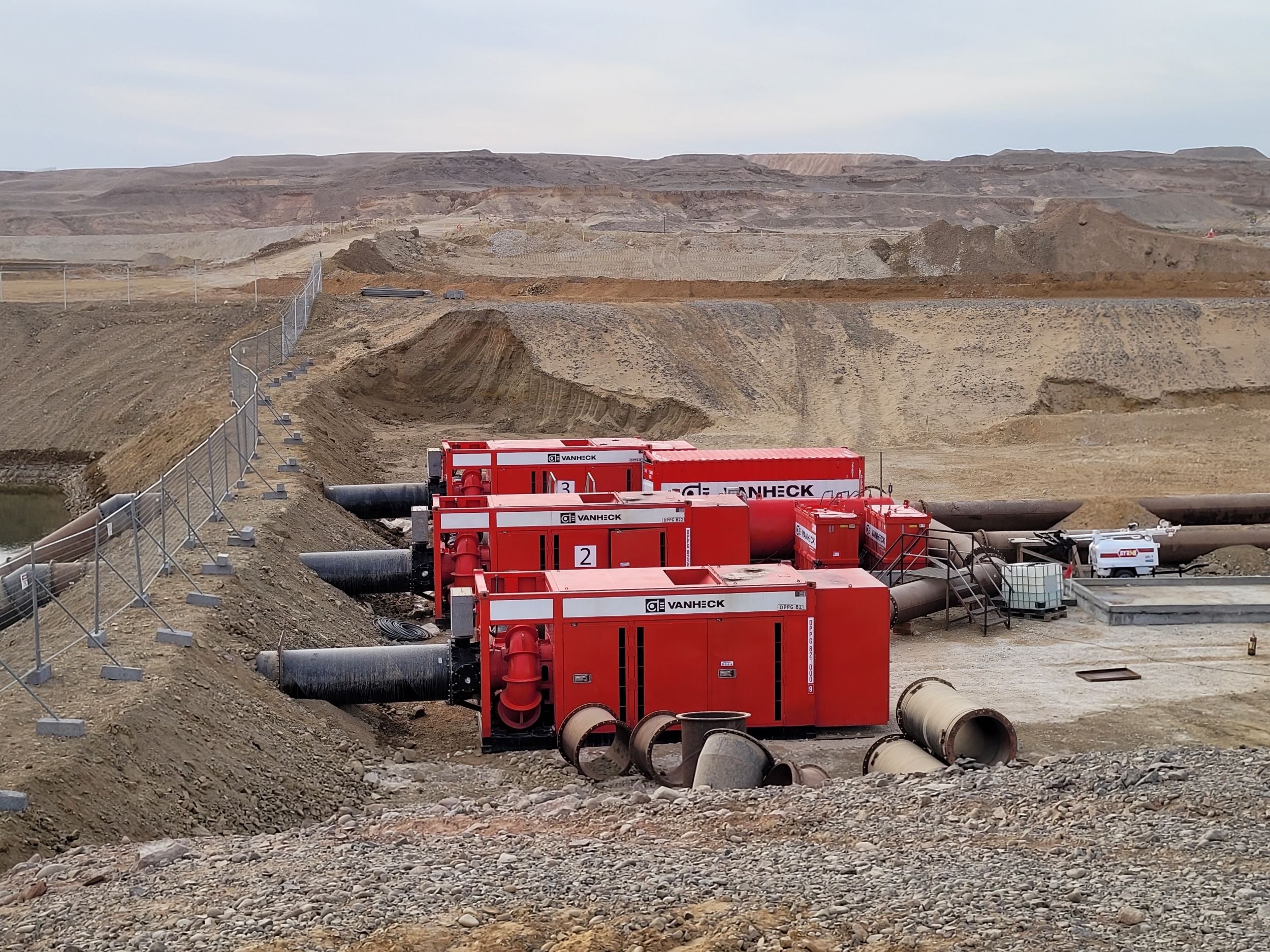
The numbers back that up. In Serbia, Van Heck deployed 20 HK700 pump units powered by Cat C27 engines to drain a flooded coal mine, the country’s main energy source at the time. The machines ran 24/7 for nine consecutive months, removing 150 million cubic metres of water, roughly 60,000 Olympic swimming pools.
More recently, six large pump units powered by Cat C32 and C27 engines operated for 18 uninterrupted months in 50°C (122°F) heat during the construction of a new port in Saudi Arabia. There was no drama. And that is exactly the point.
Built, tested and over-prepared
Van Heck designs, builds and operates its own machines, which gives the company a unique perspective. “We design it, we build it, and we operate it,” says van Dijk. “So, we know exactly the balance between correct design and correct engine.”
Each unit packs enormous power, up to 750 kW, into a compact 20-foot container frame. Cooling systems are engineered in cooperation with Caterpillar specialists, calculated from engine ratings and thermal loads, then proven in a heated 55°C test facility before deployment.
“There’s a lot of technical knowledge that Caterpillar supports us with,” van Dijk says. “Every machine we produce, Cat technicians are here for factory acceptance tests and that support is invaluable.”
The relationship is about more than horsepower. It’s about professionalism and exemplary standards. “If you have a good engine and you build a good setup, you have a problem-free installation. Caterpillar helps us supply that service to our customers.”
Herman van Dijk
CEO and Owner
Van Heck
Investing in quality
Van Heck has recently invested heavily in new Tier IV / Stage V Cat engines, that reduce nitrogen oxides and particulate matter by up to 90%, not because regulations demand it everywhere they operate, but because they want to lead by example.
“Our objective is to supply the best possible solution,” says van Dijk. “We only buy the cleanest engines available.”
For a rental company that builds and runs its own fleet, that represents a major commitment. But for Van Heck, the reason is simple: “Our right to existence is our unequivocal assurance for seamless, trouble-free operation.”
In industries where downtime can cost millions, quality and reliability aren’t exciting. They are essential. And for Van Heck and Caterpillar, that shared commitment is what keeps the world’s toughest projects moving.
Your Business
 North America – English
Caterpillar Brands
- Caterpillar.com
- My Marketing Preferences
- Site Map
- Cookie Settings
- Legal
- Privacy
- Do Not Sell or Share My Personal Information
- Accessibility Statement
- US-English
- © 2026 Caterpillar. All Rights Reserved.