
Proven performance where space is tight
By Caterpillar | Posted: March 30, 2026
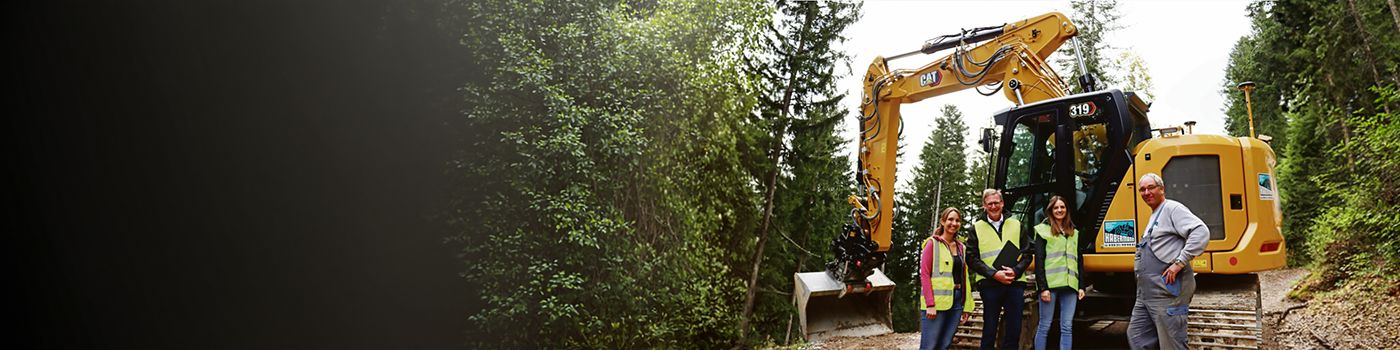
When Andreas Habermann, head of the construction company that bears his name and is based in Waakirchen in the Bavarian district of Miesbach, takes the controls of the new 319 compact radius excavator, expectations are high.
The contractor normally operates a Cat® 323, but he is equally familiar with all the other machines in the family‑owned company’s fleet. These include additional crawler excavators such as the Cat® 325, 325D, and 323E; mini excavators like the Cat® 301.8, 306, and 309; wheel loaders including two Cat® 950s, a Cat® 930, and a 926; as well as dozers such as the Cat® D6 and D5.
Because the operator originally scheduled for the job was unavailable, Andreas Habermann stepped into the cab himself.
“The best excavator we’ve ever had was a Cat® 320ELRR. It was the predecessor of our current machine and impressed across the board thanks to its dimensions. The excavator was powerful, had plenty of force, and was extremely easy to handle.”
That set the benchmark.
His first conclusion about the new 319 compact radius excavator was clear.
“This excavator is exactly what we need. It’s very easy to operate.”
To understand why, we took a closer look at how the machine performs in everyday work.
Operating Weight
Right in the sweet spot for real jobsites
Andreas Habermann
Performance
Strong, quiet, and efficient throughout the day
Andreas Habermann
Reach and Digging Depth
Built for everyday construction work
Andreas Habermann
Transport
Compact dimensions that simplify logistics
Andreas Habermann
compact radius design
Confidence when working close to obstacles
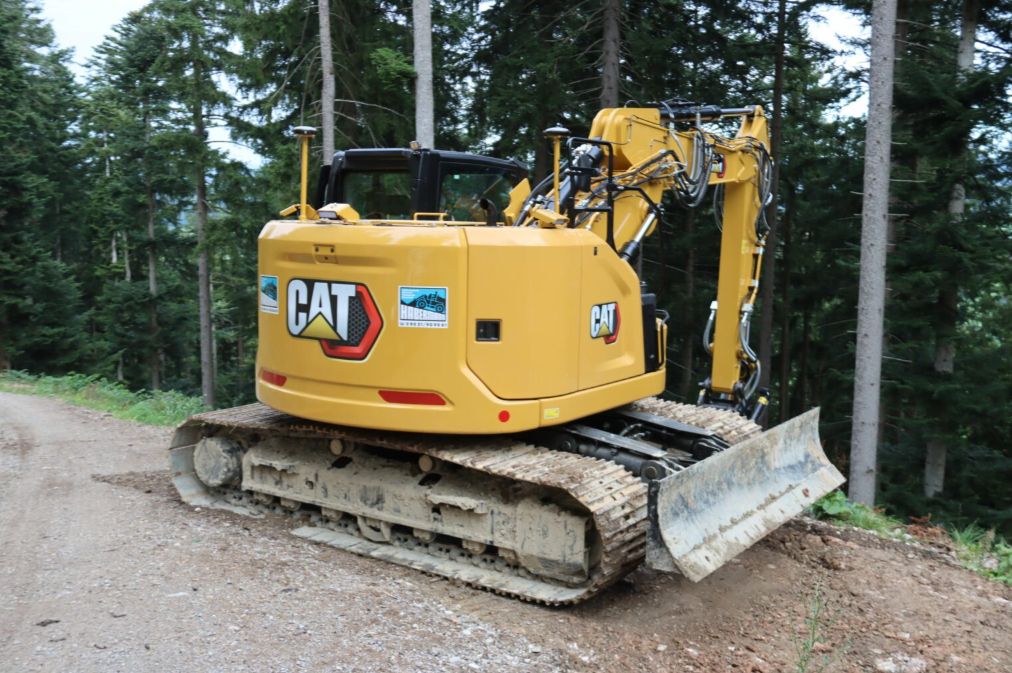
“The machine has 700‑millimeter‑wide track shoes. Despite the compact radius design, it stands very stable thanks to blade support. Nothing wobbles, even when I lift heavy material with the bucket.
Especially for our forestry road construction work, it’s important that the upper structure does not extend beyond the undercarriage. When building skid roads, there must be no risk of hitting tree trunks when slewing.
This is becoming increasingly important on construction sites as well. When backfilling properties, we need to work very close to buildings, which is always possible with the 319 compact radius excavator thanks to its rear swing radius of 1,750 millimeters.”
Andreas Habermann
Comfort and Visibility
Designed around the operator
Andreas Habermann
Assistance Systems
Technology that supports precise work
Andreas Habermann
a compact radius excavator that earns its place
The new 319 compact radius excavator fully met Andreas Habermann’s expectations. For him, the conclusion is clear: the machine has earned a permanent place in his fleet.
Test Conditions
One excavator, many applications
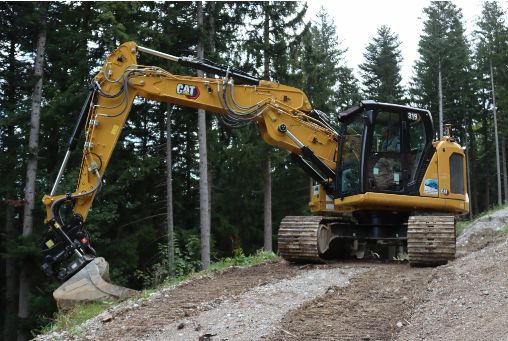
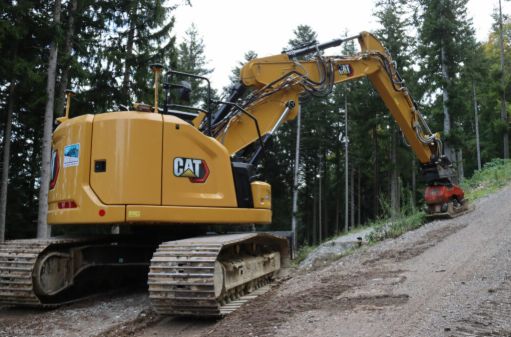
The first task for the 319 compact radius excavator was backfilling work. The next stop was deep in the forest. The machine had to handle a longer uphill stretch typical of the Upper Bavarian region before repairing and stabilizing a forestry road section. This involved spreading and compacting silty material mixed with coarse stones over a grid mat.
“The excavator is well suited for a wide range of attachments,” explains Theresia Brändle.
The construction company worked with a bucket equipped with a tiltrotator as well as a mounted compactor.
“That has proven very effective, especially when we need to compact material along buildings. We don’t need an additional vibrating plate or a second worker. We can do everything with the excavator.” - Andreas Habermann
A quick coupler supported fast tool changes.
“This turns the machine into a carrier unit that can work multifunctionally.” - Dominik Wiesböck, senior sales representative, Zeppelin Munich
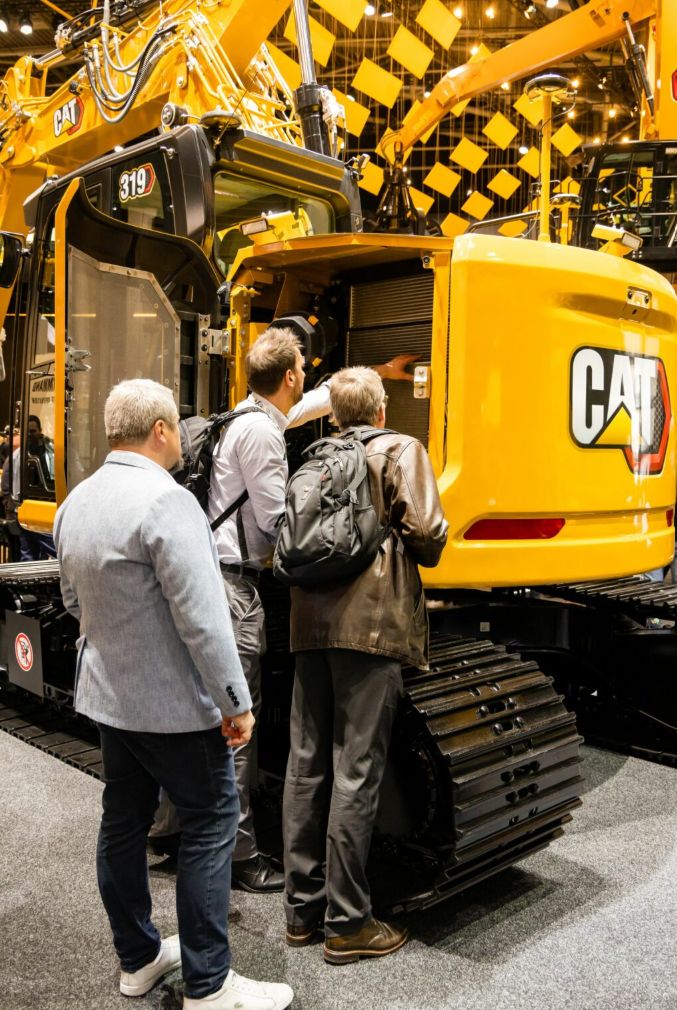
built for modern construction requirements
The 319 compact radius excavator is available with mono or variable boom configurations and different stick lengths. It is part of Caterpillar’s latest machine generation and can be equipped with integrated assistance systems such as 2D grade control, grading assist, payload system, lift and swing limitation, and heavy lift. Factory‑integrated Cat® Grade 3D is also available.
These technologies are designed to support precise work results and help operators stay efficient on busy jobsites.


CONNECT WITH US
In person or online, we're here to help you find the answers you need. Reach out to your local Cat dealer for advice close to home. Sign up for our newsletter to hear from industry experts. Or keep exploring this site for additional information.
Products
Services & Support
How Can We Help?
Connect with Cat
 Europe ‧ English
Caterpillar Brands
- Caterpillar.com
- Contact Us
- My Marketing Preferences
- Site Map
- Cookie Settings
- Legal
- Privacy
- Do Not Sell or Share My Personal Information
- Europe-English
- © 2026 Caterpillar. All Rights Reserved.